


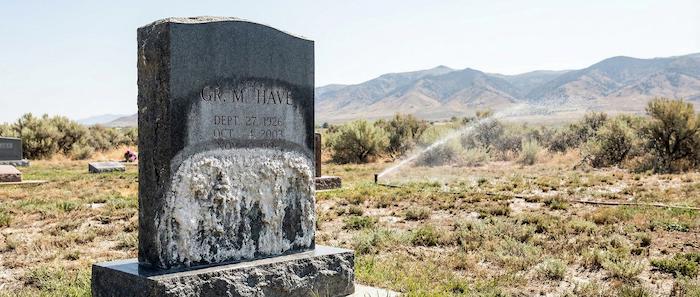
Irrigation Scale (The "White Mask")
Southern Idaho is high desert. To keep cemeteries green, the sprinklers run constantly. Our water is loaded with minerals. When that water hits a hot headstone, it evaporates instantly.
The calcium stays behind. It builds up layer by layer until the stone looks like it was dipped in concrete. We call it the "white mask" because it completely hides the inscription. You can't scrub this off. If you use a wire brush, you ruin the polish. We use a specialized acidic cleaner for professional grave stone cleaning services. It chemically dissolves the calcium bond. We wash the white crust away and the granite looks new again.
High Altitude Sun Damage
The air is thin here. The UV rays are intense. The sun hammers the stones all day long. This burns the paint right out of the lettering.
After a few decades, a black granite stone turns a dull gray. The contrast is gone. You can barely read the name. We don't just wash these stones. We condition the granite to bring back its natural depth and color. Then we re-letter it using industrial enamel. This paint cures hard and holds its color against the UV rays much longer than the factory finish.
Pine Pitch in the Mountains
Up north and in the mountain cemeteries, the problem is pine trees. They drop sticky pitch (sap) all summer.
It lands on the marker and bakes into a hard, black lump. Dirt sticks to it. It looks terrible. Regular soap won't touch it. Scraping it with a blade risks scratching the stone face. We use a specific solvent that melts the resin. It turns the pitch back into a liquid so we can wipe it off without damaging the memorial.
Frost Heaves and Leaning
Idaho winters are cold. The ground freezes deep. When the dirt freezes, it expands and pushes the monuments up. When it thaws, they drop, but they never land flat.
We see upright stones tilting dangerously. Flat markers heave up and get hit by mower blades. We fix this by digging out the unstable dirt. We replace it with a deep bed of crushed gravel. Gravel drains instantly. Since there is no water held in the base, the ground doesn't heave when the temperature drops. The stone stays level.
Lichen in the Shade
In the older, shaded sections, lichen is the enemy. It loves the texture of older granite and sandstone.
The lichen roots dig into the rock surface. They produce acid that eats the stone minerals. Families looking for grave site cleaning services often try to pressure wash it. That blasts the face right off the stone. We use a biocide. It kills the lichen completely. The growth dies, shrivels up, and washes off with a gentle rinse.
High Desert Dust
The wind on the Snake River Plain never stops. It carries fine volcanic dust. When it rains, that dust turns into a mud paste that settles in the letters.
It dries hard. Over time, it packs in so tight that the letters disappear. We use fine picks and brushes to clean this out. We clear every letter by hand. It is slow work, but it restores the readability of the monument without using harsh chemicals or high pressure.