
Fighting Heavy Clay and Tree Sap in Olathe
The dirt in Olathe is tough. Locals call it "Johnson County Gumbo." It is thick, sticky black clay. It holds water. Rain turns it into deep, unstable mud. Summer heat bakes it into a hard brick. This constant change moves the ground. Flat markers don't stand a chance; they sink deep. We find markers in Olathe Memorial Cemetery that are buried under four inches of mud and sod.
The other issue comes from the trees. The historic cemeteries here are lined with massive oaks and maples. They look peaceful, but they drip sticky sap onto the stones. The Kansas wind blows dust into that sap, creating a black, tar-like crust that water cannot wash away. Families searching for headstone cleaning services near me call us to dig out those sunken markers and to dissolve that stubborn black resin.
Lifting Markers from "Gumbo" Clay
When a flat marker sits directly on clay, it is doomed to sink. The mud creates suction. As the ground shifts, it pulls the stone down.
We break that suction. We cut the grass back and pry the stone out of the mud. We don't just put it back on dirt. We excavate a deeper bed and fill it with crushed limestone gravel. We tamp it until it is rock hard. Gravel allows water to pass through. It creates a stable, non-shifting pad. The clay underneath stays put, and the marker stays level.
Dissolving Black Tree Sap
Sap is acidic and sticky. Once it hardens on granite, scrubbing it with soap is useless. You just smear the black goop around.
We use a solvent specifically for organic resins. We apply it to the black spots. It softens the hardened sap and turns it back into a liquid. We wipe it off with clean rags. This reveals the clean stone underneath without scratching the polish with wire brushes.
Removing Hard Water Haze
Olathe cemeteries are well-watered. But the water is hard. After a few seasons of irrigation, polished granite develops a white, cloudy film. It creates a barrier over the inscription.
We strip this film chemically. We use a buffered acid cleaner. We brush it over the white deposits. It fizzes as it dissolves the calcium. We rinse it fast to prevent etching. The stone's natural color and reflection return immediately.
Cleaning Pioneer Limestone
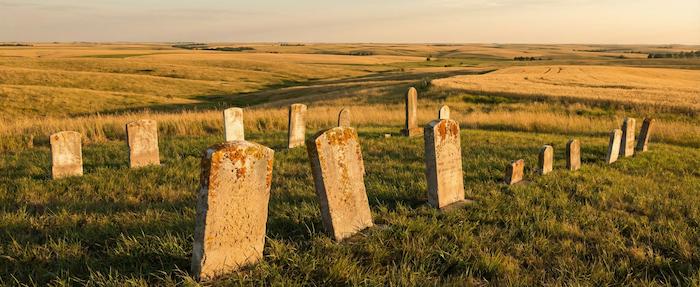
Olathe has graves from the 1800s, from the Oregon Trail days. These are soft limestone. They are often covered in orange and grey lichen. The lichen roots dig into the stone.
We never scrub these. They are too soft. We spray them with a biological cleaner that soaks into the pores. The chemical causes the lichen to release its grip. It flakes off the stone naturally over time. It cleans the stone without us touching it with a tool.
Restoring Bronze Patina
Oak Lawn Memorial Gardens has many bronze markers. The sun cooks the factory clear coat until it flakes off. The exposed bronze turns a dull green.
We refinish them on-site. We remove the old coating and the oxidation using abrasive pads. We bring the metal back to a rich, brown bronze color. We heat the marker to ensure it is dry, then seal it with a high-grade exterior lacquer.
Fixing Mower Damage
Maintenance crews have to work fast. Mowers hit the corners of the base stones. We see white, jagged chips on the grey granite.
We repair this by reshaping the stone. We use diamond pads to grind the sharp chip down into a smooth curve. We can't replace the missing chunk, but we can make the damage look intentional and finished, preventing further chipping.
Service Costs in Olathe
Digging a marker out of heavy clay is hard labor. Cleaning fragile pioneer stone takes expensive solutions. We need to see the stone to price it. Use our online pricing tool. Pick the cemetery, show us the stone, and we give you a quote.
- Leveling: Resetting sunken markers on a gravel base.
- Sap Removal: Cleaning sticky tree resin and tar.
- Scale Removal: Dissolving hard water calcium deposits.
- Bronze Care: Refinishing oxidized plaques.


