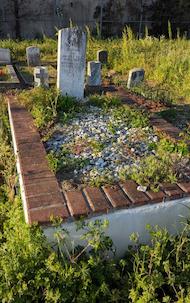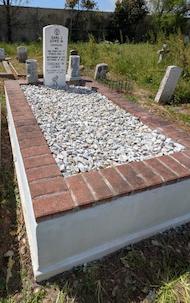
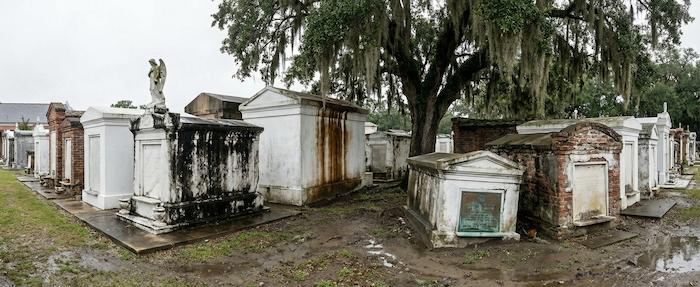
Cleaning Red Clay and Oak Sap in Baton Rouge
We don't fight the swamp mud like they do down river, but we have the red clay. That iron-heavy soil is tough to handle. Every time it rains, red mud splashes onto the bottom of the markers. You can't just hose it off. The rust soaks right into the stone pores and turns the grey granite bright orange.
Then you have the trees. The historic cemeteries like Magnolia and Roselawn are famous for their massive Live Oaks. They are beautiful, but they drip sap and drop tannic leaves constantly. That mixture creates a sticky, brown glaze on the monuments that hardens in the sun. Families searching for headstone cleaning services near me call us to strip that brown glaze or to pull the stubborn red clay stains out of the family marker.
Red Clay and Rust Stains
The soil here is full of iron. You can see the red tint in the ground everywhere. When that mud sits on a headstone, it acts like a dye. White marble and grey granite soak it up. You scrub the mud off, but an orange shadow stays behind.
Soap won't touch that stain because it is basically rust. We use a specific poultice designed to draw iron out of stone. We apply it to the orange spots and let it sit. It sucks the rust out of the rock pores. When we rinse it, the natural color of the stone comes back.
Oak Sap and Tannins
Live Oaks are everywhere in Baton Rouge cemeteries. They provide shade, but they also drop sap. That sap acts like glue. The wind blows dust and pollen right into that sticky mess. The sun cooks it into a hard, black shell. It fills in the carved letters until you can't even see the inscription anymore.
You can't just chip it off. If you use a scraper, you will ruin the smooth finish on the granite. We use a solvent that softens the sap. It turns the hard crust back into a liquid so we can wash it away gently. We also treat the stone to remove the brown tea-colored stains left by rotting oak leaves.
Green Algae in the Shade
Because of the big trees, many plots stay in the shade all day. In this humidity, that means green algae takes over. It covers the markers in a slippery green film. It looks bad, and it makes the stone slippery and dangerous to walk near.
We kill this with a biological cleaner. We don't use bleach because it can damage the old marble. Our cleaner kills the algae roots so the stone stays clean for a year or more, even in the deep shade.
Fire Ant Mounds
Fire ants are a real problem in the dry clay soil here. They build hard mounds right against the base of the headstones. The acid in the soil they move can stain the stone, and the mounds can actually tilt smaller markers if they build underneath them.
We carefully flatten these mounds and clean the dirt away from the base. We check to make sure the stone hasn't been undermined. If the ants loosened the ground too much, we pack fresh gravel under the base to level it out again.
Service Costs in Baton Rouge
Removing deep red clay stains takes multiple treatments. Scrubbing a whole family plot that has been sitting under an oak tree for twenty years takes time. I can't just guess the cost. I need to see how bad the staining is first. We have an online tool to help. You pick the cemetery, tell us the problem, and you get a clear price instantly.
- Clay Removal: Extracting deep red iron stains.
- Sap Cleaning: Removing sticky oak sap and tannins.
- Algae Treatment: Killing green growth in shaded plots.
- Leveling: Resetting stones shifted by soil or ants.