The "Granite State" Freeze
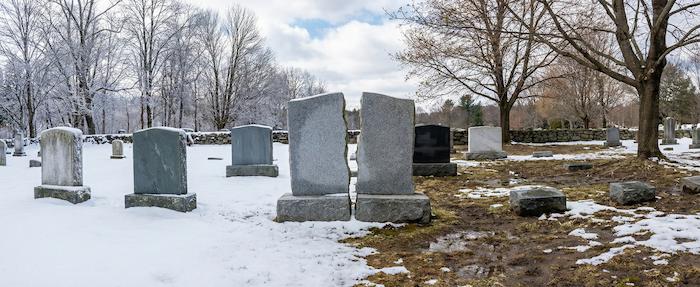
We are the Granite State, but even our local stone cracks. The frost here goes deep. When the temperature drops to twenty below, any water inside that stone turns into a wedge. It splits blocks of Concord granite right down the middle.
We see heavy monuments pushed completely off their bases by frost heaves. You can't just push them back. The ground underneath is compromised. For tombstone repair and restoration, we dig out the old foundation. We go down below the frost line—sometimes four feet or more. We pour a reinforced footer that won't move when the ground heaves next winter.
Lichen on Rough Granite
Our granite is tough, but the traditional "rock pitch" finish is rough. That uneven surface is a magnet for lichen. In our damp woods, it forms thick gray and green scabs over the names.
That lichen isn't just sitting there; it is eating the stone. The roots dig into the minerals. Wire brushes damage the crystals. We use a biological cleaner. We soak the growth, and it kills the roots. Over time, the dead lichen falls off. The stone gets clean, and the rough texture stays sharp.
Mud Season Instability
Spring means mud season. The top foot of soil thaws while the ground below stays frozen. The dirt turns into soup. Heavy headstones sink or tip over because the ground has no strength.
We fix a lot of "leaners" in May and June. We lift the stone and excavate the mud. We replace it with crushed stone that drains well. We create a dry, solid pad so the monument stays level, even when the rest of the cemetery is a bog.
Old Slate Delamination
Before we switched to granite, we used slate. You see it in all the colonial graveyards. It is a layered stone. Water gets into the top edge, freezes, and pushes the layers apart.
The face of the stone starts to peel off. We have to catch this early. We clean the dirt out from between the layers and inject an adhesive. We clamp it until it sets. Then we cap the top edge to keep the rain out. If you don't seal that top edge, the next winter will just split it open again.
Acid Rain on Marble
The Northeast gets hit hard by acid rain. It eats the calcium right out of our old white marble markers. The surface gets sugary and rough. The lettering washes away.
If you scrub these stones, the face comes off with the dirt. We are extremely gentle. We wash them with soft bristles just to get the green growth off. Then we apply a consolidant. It soaks deep and locks the loose grains together. The stone won't look brand new, but it will stop falling apart.
Maple Sap and Sugar
Sugar Maples line the stone walls of almost every cemetery here. In spring, they drip sap. That sap hits the headstone and cooks into a black tar.
Rain doesn't touch it. Scraping it scratches the polish. We use a solvent that melts the sugar mess so we can wipe it away. We also rake up the helicopter seeds. They pile up wet against the base and rot the stone.
Moss in the North Country
Up north, the woods are thick. Many cemeteries are in deep shade. Moss takes over completely. It covers the markers in a thick green carpet.
That moss keeps the stone wet 24/7. That leads to freeze damage. We scrape the moss off and treat the stone to kill the spores. As part of our grave site cleaning services, we trim back low-hanging branches. The best thing for these stones is a little sunlight and wind to keep them dry.
Road Salt Spray
Winter road crews don't hold back on the salt. Brine splashes onto the roadside cemeteries. That salt soaks into the porous granite and concrete bases.
When it dries, the salt crystallizes and blows the surface apart. We flush these stones with fresh water and a neutralizer as soon as the snow melts. For headstone cleaning services near the highway, getting that salt out is the only way to save the stone from crumbling.