
Lifting Sunken Markers and Cleaning Agricultural Grime in Wahpeton
Wahpeton sits where the Red River begins. The soil here is famous for farming, but it is terrible for headstones. It is heavy, black clay. We call it gumbo. It holds water like grease. Heavy rain turns the soil into soup. Heavy granite monuments sink straight down. We often find flat markers in Fairview Cemetery that are buried under inches of mud and turf.
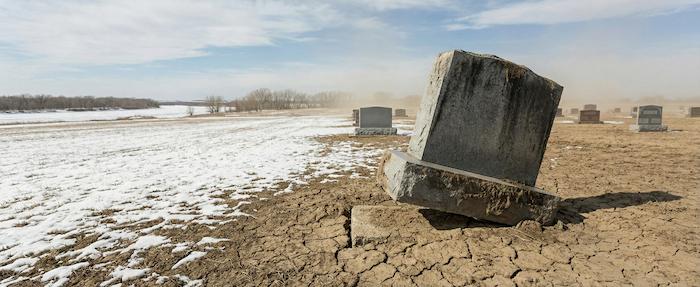
The winters make it worse. That wet clay freezes solid. It expands and heaves upward. It grabs the concrete foundations of upright stones and snaps them. Monuments end up tipping sideways. On top of the soil issues, the air is full of dust from the fields and local processing plants. This grime sticks to the stones and turns the lettering black. Families searching for headstone cleaning services near me call us to lift their sinking markers and to scrub that sticky agricultural dust off the family names.
Lifting Sunken Flat Markers
Flat stones disappear in Wahpeton. The clay gets soft in the spring. The stone is heavy. It pushes the mud away and drops. Grass grows over the edges until the marker is gone.
We fix this by changing the soil under the stone. We cut the sod back. We pry the heavy marker out of the mud. We dig out the clay and replace it with crushed, angular gravel. We pack it tight. Rock locks together and holds the weight. We reset the stone flush with the grass. It stays visible because it sits on a solid base.
Fixing Frost-Heaved Foundations
Upright monuments lean because the foundation failed. The frost in Richland County is powerful. It shoves the concrete pad up unevenly. If the concrete is weak, it breaks.
We replace the failed foundation. We hoist the monument. We remove the broken concrete and the wet clay. We install a thick layer of compacted gravel. This disconnects the stone from the heaving soil. The ground can move around it, but the stone stays level.
Cleaning Sticky Agricultural Dust
The dust here contains organic material from the fields. It is sticky. It packs into the engraved dates and names. Moisture binds the dust into a hard grout.
We clean this by hand. We use a surfactant to loosen the grime. Then we use wooden picks to scrape the packed dirt out of every letter. We scrub the face of the stone to remove the grey film. It restores the contrast. The inscription becomes sharp and readable again.
Killing River Lichen and Moss
The humidity from the river feeds lichen. We see orange and grey scabs growing on the rough edges of the stone bases. Moss grows in the shade.
We kill it chemically. We soak the lichen in a biocide. It turns to mush and releases its grip. We wash it off. This clears the stone immediately. We never scrape dry lichen; it leaves metal marks on the stone and leaves the roots alive.
Restoring Oxidized Bronze
Snow sits on the bronze markers in the memorial gardens for months. The moisture destroys the factory clear coat. The bronze turns green and chalky.
We refinish the metal on-site. We strip the green corrosion and the failing lacquer. We sand the surface to reveal bright bronze. We heat the plaque with a torch to dry it out. We spray a new industrial sealer on the hot metal. It bonds instantly. The marker looks dark and new.
Repairing Mower Scuffs
Mowers run tight to the stones. They hit the corners. We see black tire rubs and chipped granite edges.
We clean the rubber marks with a solvent. For chips, we use diamond files. We grind the sharp, broken edge into a smooth bevel. It looks intentional. It also prevents the mower blade from catching that same jagged spot again.
Service Costs in Wahpeton
We don't need to visit the cemetery to give you a price. We have fixed, transparent pricing for all our services, including raising sunken flat markers and frost heave repair. Check our subscription builder to see the exact cost for your plot.
- Leveling: Lifting sunken markers/fixing frost heave.
- Detail Cleaning: Removing sticky dust from letters.
- Bronze Care: Refinishing oxidized plaques.
- Lichen Removal: Killing heavy biological growth.


