
Cleaning Historic Limestone and Removing Red Clay in Franklin
Franklin is full of history. The markers in Rest Haven and the City Cemetery are some of the oldest in Tennessee. Most are made of local limestone or soft marble. These stones are porous. They hold water. That dampness feeds heavy black algae. We see angels and tablets that have turned solid black. This isn't just surface dust. It is a living infestation that roots into the rock and eats the binder.
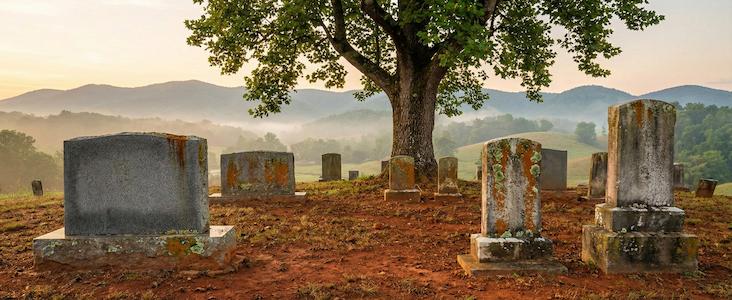
The ground is the other trouble. Williamson County clay is red and sticky. When it rains, that mud splashes onto the base of the monuments. It soaks right in. A garden hose won't touch it. The iron in the clay dyes the stone deep orange. Families searching for headstone cleaning services near me call us to kill that black mold on their historic limestone and to pull those deep clay stains out of the granite.
Cleaning Fragile Limestone
The Civil War era stones in Franklin are fragile. If you hit them with a pressure washer, you destroy them. We see stones where the dates are blown right off the face. You cannot scrub this soft stone with wire brushes either.
We clean it by killing the growth. We saturate the stone with a biocide. It soaks deep into the pores and kills the roots of the algae. The black stain dies and turns brown. We rinse it away with low pressure. The stone gets white again because the growth is gone, not because we scraped the surface down.
Extracting Red Clay Stains
Red clay stains are chemical, not just physical. The iron in the dirt dyes the stone orange. You can't wipe it off. It is buried in the pores.
We apply a thick paste to suck the stain out. We smear the cleaner over the orange banding. It sits there and pulls the iron pigment out of the rock. We wash the dried paste away, and the stone looks grey again.
Resetting Stacked Monuments
Franklin has many tall Victorian monuments. These are built in sections: a base, a die, and a cap or statue. Over a hundred years, the old mortar turns to dust. The heavy stones start to slide. We see obelisks that are twisting and ready to fall.
We fix them by taking them apart. We hoist the upper sections down. We clean the old, rotted mortar off the joints. We apply a new monument setting compound and re-stack the stone. It stands straight and won't wobble.
Consolidating "Sugaring" Marble
Acid rain damages the old white marble. The binder dissolves, and the stone turns to sugar. If you touch it, white sand falls off.
We stop the rot. We apply a consolidator fluid. It soaks into the crumbling stone and hardens. It glues the sand grains back together. This freezes the erosion and saves the inscription from washing away.
Restoring Bronze Markers
In the newer memorial parks, the humidity destroys the clear coat on bronze markers. The metal oxidizes and turns green.
We restore them right at the grave. We strip the corrosion down to the bare metal. We sand the lettering to make it pop against the background. We heat the bronze to remove moisture, then spray a heavy-duty industrial sealer. It stops the oxidation and keeps the marker looking polished.
Repairing Mower Scuffs
Landscapers run tight to the stones. They hit the corners. We see black rubber marks and chipped granite edges.
We wipe the rubber marks off with a solvent that melts the tire residue. For chips, we use diamond files. We grind the sharp, broken edge into a smooth bevel. It looks finished and stops the mower from catching that same jagged spot again.
Service Costs in Franklin
We have flat-rate pricing for Franklin, Brentwood, and Thompson's Station. We don't need to visit the cemetery to give you a price. Check our subscription builder to see the exact cost for your plot.
- Biological Cleaning: Killing black mold on limestone/marble.
- Clay Removal: Extracting red soil stains.
- Resetting: Stacking and leveling historic monuments.
- Consolidation: Hardening crumbling historic stone.


