
Cleaning Limestone and Removing Highway Soot in Davidson County
The Nashville-Davidson metro area is tough on stonework. The highway loop wraps right around the older cemeteries. Diesel exhaust coats everything here. Diesel soot is sticky. It doesn't blow away like dirt. It cakes onto the stone and turns black. After a few hot summers, that grime fills the engraving so deep you can't even see the name. Out in the older parts of the county, like Joelton and Antioch, the issue is nature. The humidity from the Cumberland River stays trapped under the trees, turning white limestone markers solid black with algae.
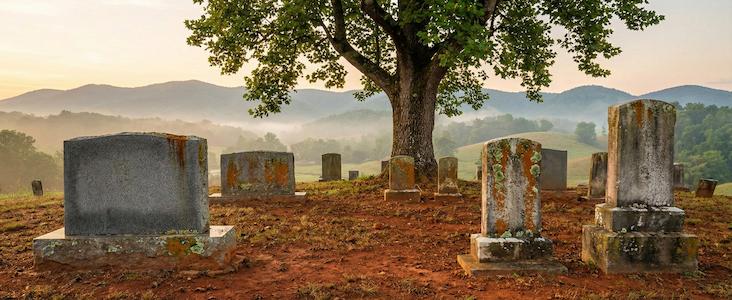
The soil across the entire county is full of iron. It is that famous Tennessee red clay. When it rains, mud splashes onto the porous bases of the monuments. Water just runs right off it. The clay soaks into the stone pores and stays there, leaving a deep orange band that people mistake for iron rust. Families searching for headstone cleaning services near me call us to strip off that highway grime and to pull those deep red clay stains out of the stone.
Killing Black Algae on Soft Limestone
Davidson County has thousands of old limestone markers. This stone is like a sponge. It holds water, which feeds black mold and algae. If you scrub this soft stone too hard, it crumbles.
We clean it without scrubbing. We saturate the stone with a biocide. It kills the roots of the algae growing inside the rock. The black sludge dies and turns liquid. We rinse it away with low pressure. The stone turns white again because the growth is gone, not because we sanded it down.
Removing Highway Exhaust and Grime
The traffic in Nashville is constant. Diesel exhaust and brake dust settle on the headstones in Woodlawn and Spring Hill. This grime mixes with rain and bakes onto the granite. It fills in the dates and names.
We use a degreaser to break it down. We spray the stone and let the cleaner cut through the oily binder. Then we brush the lettering to clear out the sludge. A final rinse washes the grey film away, making the inscription readable again.
Extracting Red Clay Stains
Red clay stains are chemical, not just physical. The iron in the dirt dyes the stone orange. You can't wipe it off.
We extract it. We apply a thick chemical paste over the stained base. It sits there and pulls the red pigment out of the granite pores. We wash the paste away, and the stone goes back to its natural grey color.
Leveling Sinking Lawn Markers
The soil here shifts when it gets wet. In the memorial parks, flat bronze and granite markers sink. Grass grows over the edges until the marker disappears completely.
We fix this by lifting the stone. We cut the sod back. We pull the marker up and pack the hole with crushed gravel. This stops the marker from sinking back into the mud. We set it flush with the ground so mowers can go over it without hitting the metal.
Stabilizing "Sugaring" Limestone
Acid rain and age make the old limestone markers in the City Cemetery fall apart. The surface turns to sand (sugaring). If you touch it, the lettering falls off.
We stop the decay. We gently brush off the loose sand. Then we soak the stone in a consolidator fluid. It hardens inside the rock and glues the grains back together. This freezes the erosion and saves the history that is left.
Repairing Mower Scuffs
Cemetery crews work fast. Their mowers hit the corners of the headstones. We see black tire rubs and chipped edges on nearly every plot we visit.
We clean the rubber marks with a solvent. For chips, we use diamond files. We grind the sharp, broken edge into a smooth bevel. It looks finished and prevents the mower from catching that same jagged spot again.
Service Costs in Davidson County
We offer flat-rate pricing for the whole metro area. Whether you are in Bellevue or Donelson, the price is the same. Check our subscription builder to see the exact cost for your plot.
- Biological Cleaning: Killing mold/algae on historic stone.
- Clay Removal: Extracting red soil stains.
- Marker Resetting: Lifting and leveling flat stones.
- Consolidation: Hardening crumbling limestone.


