
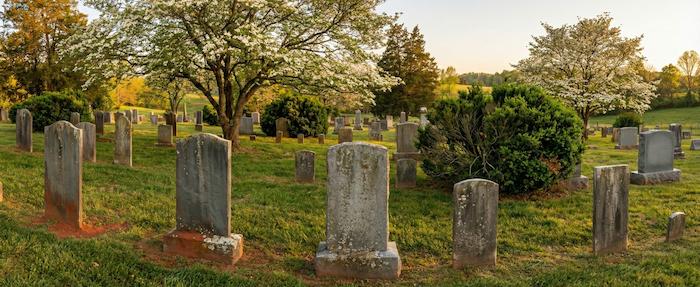
Leveling Monuments in Swamp Soil and Removing Pine Sap in Chesapeake
Chesapeake is built on wet ground. The soil here is largely peat. It acts like a sponge. It holds water and compresses easily. This is bad for heavy granite. In Chesapeake Memorial Gardens and the historic plots in Hickory, we see stones sinking constantly. The ground compresses. It doesn't erode. The heavy granite pushes the water out of the peat and sinks. We often see stones tipping backward as the soft soil gives way.
The trees are the other challenge. Loblolly pines surround many of our local cemeteries. They drop sap and yellow pollen. The sun bakes this mix onto the headstones. It turns into hard, black spots that look like tar. Dirt sticks to it and hardens. If you try to scrub it, the sap just smears across the granite. We fix these sinking stones and use solvents to clean the pine tar that soap won't touch. Families look for headstone cleaning services near me when they see their monuments disappearing into the soft ground or covered in black, sticky spots.
Stabilizing Stones in Peaty Soil
Peat soil is soft. It holds a lot of water. When you put a heavy stone on it, it sinks slowly over years. Adding more dirt underneath is a temporary fix. The dirt just compresses like the rest of the ground.
We build a floating foundation. We hoist the monument. We dig out the organic, peaty soil. We install a wide, deep pad of crushed gravel. We pack it solid. This creates a larger footprint that spreads the weight of the stone. It drains water away from the base. The monument sits on this rock raft, staying level even if the soft ground around it moves.
Removing Pine Sap and Pollen
Pine sap bonds to granite. Once it hardens, water rolls right off it. It creates a waterproof seal over the dirt it trapped.
We dissolve the sap. We use a solvent made for organic resins. We apply it to the tar spots. It softens the sap so it releases its grip on the stone pores. We wipe it away. Then we wash the stone to remove the yellow pollen stain left behind. The granite comes out clean, without the sticky residue.
Killing Swamp Mold and Algae
The humidity in Chesapeake is high. The woods block the wind. This creates perfect conditions for algae. We see green and black growth covering stones in shaded family plots.
We kill it chemically. We use a biocide that penetrates the stone. It kills the spores deep inside. The growth dies and turns brown. We rinse it away. This cleans the stone completely without using pressure washers, which can damage the grout on older, multi-piece monuments.
Restoring Oxidized Bronze
Chesapeake Memorial Gardens has thousands of flat bronze markers. They sit in the wet grass. The moisture attacks the clear coat. The bronze turns green and chalky, making the names hard to read.
We restore them in the field. We strip the corrosion and the old lacquer down to bare metal. We sand the high points to bring back the contrast. We heat the metal to ensure it is dry. We apply a new industrial clear coat. It seals the bronze against the ground moisture. The marker looks dark and new again.
Repairing Mower Scuffs
Mowers run tight to the stones to keep the grass down. They bump the granite. We see black rubber marks and chipped corners on the bases.
We clean the rubber marks with a solvent. For chips, we use diamond files. We grind the sharp, broken edge into a smooth bevel. It looks finished and prevents the mower from catching that same jagged spot again.
Service Costs in Chesapeake
We don't need to visit the cemetery to give you a price. We have fixed, transparent pricing for all our services, including leveling and sap removal. Check our subscription builder to see the exact cost for your plot.
- Leveling: Stabilizing monuments in soft/peaty soil.
- Sap Removal: Dissolving pine sap and pollen stains.
- Bronze Care: Refinishing oxidized plaques.
- Biological Cleaning: Killing mold and algae.


