


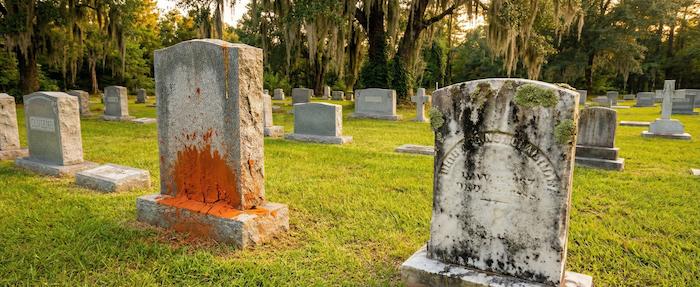
Alabama Red Clay Staining
Alabama red clay acts more like a dye than soil. Rain splashes this red slush onto the base of the monument. The sun comes out and bakes it into a hard, orange crust.
A garden hose won't wash this off. The iron pigment soaks into the stone pores. Stiff brushes usually make it worse. You end up grinding the red grit deeper into the surface. It locks the stain in. We use a different method for grave site cleaning services. We apply a cleaner that breaks the clay's bond with the rock. The stain lifts out, and we rinse it away. It restores the natural granite color without abrasive scrubbing.
Humidity and Mold
The air here stays thick and wet. Stone markers absorb that moisture. This creates a perfect spot for black mold and mildew to take over.
The stone turns black or fuzzy green. This growth eats away at the surface minerals. Pressure washers are too aggressive for this. High pressure can chip the lettering on older stones. Our headstone cleaning services near me rely on biological cleaners instead. We saturate the growth to kill the roots. The rain washes the dead debris away naturally over time. The stone gets clean without mechanical damage.
Soft Marble "Sugaring"
Our historic cemeteries are full of native white marble. It is beautiful, but it gets soft over time. Acid rain dissolves the bond between the crystals.
The polish fades, and the stone starts to feel gritty like sugar. We call this "sugaring." If you scrub this surface, the engraved names just crumble off. We handle these markers with extreme care. We use soft, natural-hair brushes for cleaning stone gravestones. We wash the dirt off without taking the stone with it. We don't try to make these old stones look brand new. If you do that, you lose the inscription. We just clean them up enough so you can read the names again.
Pine Sap Buildup
Pine trees drop sap on headstones all summer. The hot sun cooks this sap until it turns into hard, black resin.
This stuff binds to the granite. Scraping it with a knife or key is a bad idea. It scratches the polish immediately. Those scratches hold more dirt later. We use a poultice paste to remove it. The paste sits on the sap and melts it chemically. It turns soft again, and we wipe it up. This gets the sticky mess off without hurting the finish.
Fire Ant Tunnels
Fire ants build massive mounds in our graveyards. The visible mound is only half the problem.
These ants clear out the dirt underneath the concrete base. You can’t see the void from above. Then a storm hits, the tunnels collapse, and the heavy stone sinks or tips over. During cemetery plot maintenance, we inspect for these hidden dangers. We treat the colony to stop the digging. Keeping the soil stable prevents expensive repairs down the road.
Kudzu and Overgrowth
Kudzu vines grow incredibly fast in our heat. They can completely bury a headstone in just a few weeks.
The vines attach firmly to the rock. Yanking them off often pulls the monument down with them. We cut the main stems at the ground level first. We wait for the vines to wither and dry out. Once they release their grip, we remove them carefully. This keeps the plot accessible and safe for family visits.