The Salt Spray Zone
Ventura sits right in the spray zone. The ocean air here is heavy. The air is full of salt. The stone drinks it in.
Salt water penetrates the stone. It soaks into the core. The sun evaporates the moisture, but the salt remains trapped. It grows sharp crystals that push against the rock. They expand with massive force.
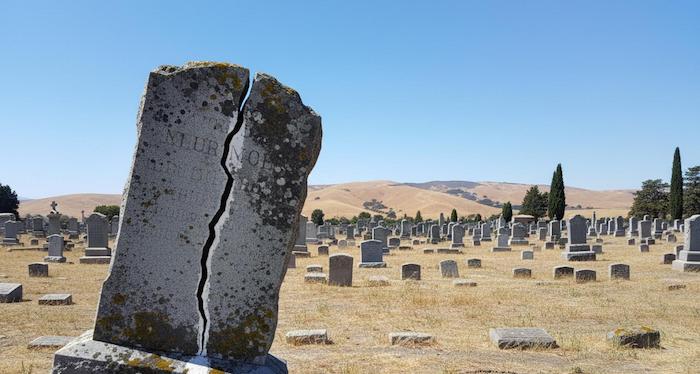
This pops small flakes off the surface . We call it "salt spalling." The polished face of the monument literally explodes in slow motion. If you are searching for headstone cleaning services near me because a marker feels rough like sandpaper or has small craters, that is salt damage.
You cannot wash the roughness away. The stone is physically missing. We treat this by drawing the salt out. We use chemical poultices to extract the chlorides. Then, we apply a consolidant to glue the crumbling surface back together and seal it against the sea air.
"Bronze Disease" at Ivy Lawn
Ivy Lawn Memorial Park has acres of flat bronze markers. The salt air eats them alive. It burns through the protective factory clear coat. Once that seal is broken, the salt attacks the copper in the bronze alloy.
It turns the metal a sickly, chalky green. Do not call this "patina." Patina is stable. This is "bronze disease." It is active corrosion. It eats pits into the metal and destroys the lettering. If you wipe it, green powder comes off on your hand.
You can't wash this off with soap. It is a chemical reaction. We specialize in cleaning bronze cemetery markers. We strip the dead lacquer and the green rot down to the raw metal. We re-patinate the bronze to a deep, healthy brown. Finally, we apply a marine-grade lacquer. This creates a hard shell that blocks the salt air, keeping the plaque legible for years.
Sticky Agricultural Dust
We get wind from the farms. It carries dust from the strawberry fields. It is full of fertilizer and oil. It hits the damp, salty headstones and turns into a sticky paste.
The sun bakes it into a hard shell. It looks like brown varnish. Standard cleaners won't touch it. It repels water.
Tending uses grave site cleaning services with specific surfactants. We have to break the chemical bond of this organic glue. We lift the "ag-paste" off the stone without scrubbing the polish. We reveal the clean granite underneath, removing the brown haze that hides the inscription.
Marine Layer Mold
The fog here is thick. It keeps the stones wet until noon. This feeds aggressive black algae and lichen. It roots into the engraving grooves. It makes the name look dirty and black, like someone rubbed soot on it.
Scrubbing this biological growth is a mistake. You just push the spores deeper into the porous rock. We use a biological inhibitor. We kill the root system inside the stone. The algae dies and releases its grip. We rinse it away, leaving the stone sterile and clean.