The Santa Susana Sandblaster
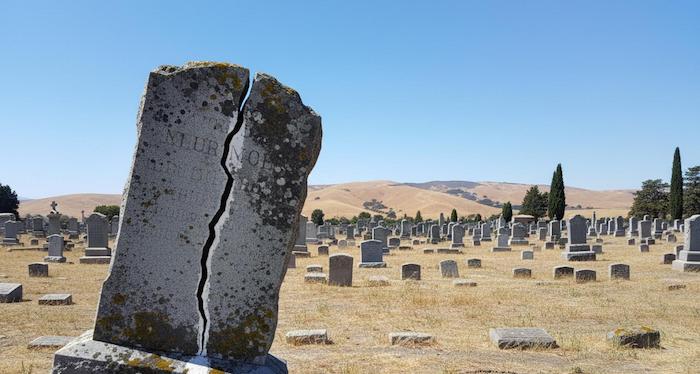
Simi Valley is a wind tunnel. Wind funnels through the Santa Susana Pass. It hits 60 mph easily. It picks up sand from the hills and sandblasts the cemeteries. It hits headstones with force.
This acts like an industrial sandblaster running 24/7. It strips the mirror polish off upright monuments. The stone goes dull, matte, and gray. If you are searching for headstone cleaning services near me because a marker has lost its shine, that is wind erosion. You can't wash it back. The surface is physically gone.
Once that factory seal is destroyed, the granite becomes porous. It acts like a sponge. It absorbs water, smog, and dirt instantly. The deep black color fades to a dusty gray. The crisp edges of the lettering get rounded off.
We stop the damage. We clean the open pores to remove embedded dust. Then, we apply a heavy-duty stone enhancer. This fluid soaks into the rough surface. It fills the microscopic craters left by the wind. It restores the "wet look" depth of color. Finally, we apply a sacrificial coating. The wind attacks this coating instead of the stone, buying the memorial years of protection.
Thermal Shear and "Walking" Stones
The temperature swing here is violent. In summer, the valley floor bakes. Dark granite absorbs this heat, expanding significantly. At night, the temperature drops, and the stone shrinks. This cycle happens every single day.
This expansion fights the glue. The stone moves, but the rigid cement foundation does not. This creates "shear force." Eventually, that pressure tears the adhesive seal apart. The tablet starts to rock or "walk" on its base.
Don't ignore a loose stone. A 500-pound granite slab is heavy. If the seal fails, it will fall. A strong wind can knock it over. Our tombstone repair and restoration teams check these stress points. We don't use standard mortar. We clean the joint and re-seal the base with high-flexibility industrial epoxy. This rubberized compound moves with the stone. It absorbs the thermal shock instead of breaking, keeping the monument upright and secure.
Wildfire Ash and Highway Soot
Simi Valley burns often. It also has the 118 Freeway running right through the middle. This brings ash and diesel exhaust.
First, there is diesel soot from the highway. It settles on the stone as a greasy, black film. It bonds to the surface. Rain won't wash it off; it beads up on the oil. Tending uses grave site cleaning services with industrial degreasers to lift this traffic film.
Second, there is wildfire ash. Even from distant fires, ash falls here. When morning dew hits that ash, it turns into a caustic paste (potassium hydroxide/lye). It burns the face of marble markers. It leaves rough, white spots that look like etching.
We use chemical neutralizers. We stop the acid reaction immediately. We draw the caustic residue out of the stone pores. We restore the smooth finish without using abrasives that would damage the history carved into the stone.