The Oak Tree Legacy
Thousand Oaks is defined by its trees. Protected Coast Live Oaks shade the cemeteries. They are beautiful, but they destroy stone. Oaks drop acid. Acorns, catkins, and wet leaves release heavy tannins.
This isn't dirt; it is a permanent dye. It turns white marble brown instantly. It creates deep, reddish-brown blotches on gray granite.
You cannot scrub this out. The dye soaks deep into the rock. Bleach makes it worse—it yellows the stone and sets the stain deeper. Tending uses specialized grave site cleaning services with biological poultices.
We apply a clay paste saturated with cleaners. It creates a chemical vacuum. It draws the tannin pigment out of the rock pores. We rinse it away. We restore the natural color without bleaching or damaging the stone's integrity.
Dry Wind Desiccation
The wind here acts like a blow dryer. It never stops. It sucks the moisture right out of the stone. The granite turns brittle and chalky. It starts to flake off if you touch it.
The deep black or red color fades into a hazy gray. If you are searching for headstone cleaning services near me because a marker looks faded, that is dehydration.
Washing it won't help. The stone is thirsty. We don't just clean; we condition. We apply deep-penetrating stone oils. These fluids soak in and re-bind the surface crystals. We feed the stone to stop the flaking. This brings back the deep, wet-look contrast that makes the engraving readable again.
Wildlife Tunneling
We share this valley with nature. Ground squirrels undermine the concrete. They turn the soil into swiss cheese. They target the cool soil beneath the monuments.
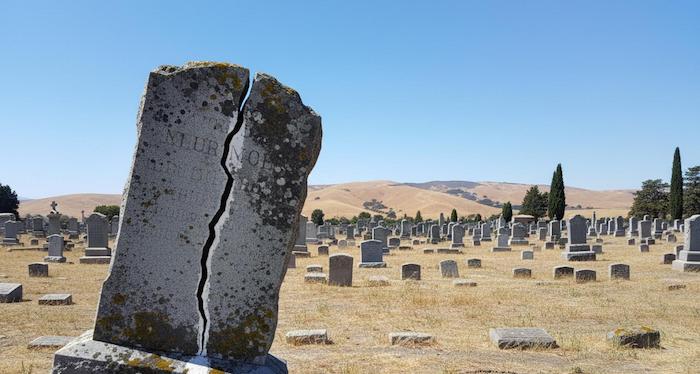
The foundation loses support. The monument tips into the empty hole. A 300-pound marker resting on a hollow tunnel is dangerous. It will eventually collapse.
Our tombstone repair and restoration teams fix the void. If we just put dirt back, they dig it right out. We pack the hole with crushed rock. It stops them cold. They can't dig through it. This creates a stable barrier that keeps the foundation level.