


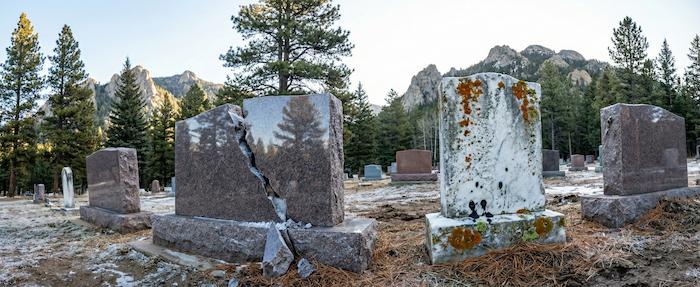
Ice Splitting the Stone
Colorado winters are rough on monuments. We get a warm sunny day, and then a freezing cold night. That swing in temperature destroys stone.
Water runs into the cracks during the day. After dark, it turns into ice and pops the stone open like a wedge. It pushes the rock apart from the inside. We see the polished face of a headstone sheer right off after a hard winter. We hunt for these cracks early. We fill them up to block the moisture. That way, the ice has nothing to grab onto inside the stone.
High Altitude Sun Burn
The sun feels different at this altitude. It is intense. It burns the stone just like it burns your skin on a ski trip.
You can see the damage on older markers. The dark granite looks gray and tired. The sun has cooked the polish right off the surface. People try to fix this with car wax or oil. That never works for long. The wax turns yellow and peels off in July. We use breathable stone conditioners for grave site cleaning services. These feed the stone. It brings back the deep color without trapping moisture inside.
Hard Water Sprinklers
Most cemeteries here pump water from deep wells. That water is full of lime and calcium. The sprinklers soak the monuments every single morning in the summer.
The water dries off, but the lime stays. It leaves a thick white scale that hides the names. It looks just like the buildup in a tea kettle, but harder. You can't scrub this off. If you use a wire brush, you will ruin the granite face. Our headstone cleaning services near me use a special mineral cleaner. It melts the white crust chemically. We wash the residue away, and you can read the inscription again.
Mountain Lichen Growth
Up in the mountains, it stays wet. The sun doesn't always dry things out under the trees. This is where lichen takes over.
You see these orange and green circles growing on the rock. They aren't just sitting on top; they dig roots into the stone pores. They eat the rock minerals to survive. If you scrape them off dry, you pull chunks of the stone off with them. We use a biological cleaning method for cleaning stone gravestones. We soak the lichen until the roots die. It lets go of the stone naturally. The rain washes it off later, and the stone stays safe.
Pine Sap and Needles
Many of our plots sit under big pine trees. The needles pile up and hold water against the base. This rots the bottom of the stone.
Then there is the sap. It drips on the marker and bakes into a hard, black blob. Scraping it scratches the polish instantly. We use a poultice paste. We put it on the sap spots and let it work. It turns the hard resin back into a soft liquid. We wipe it away gently. It solves the sticky problem without aggressive scraping.
Spring Mud and Sinking
Spring thaw turns the dirt to mush. The ground loses all its strength. Heavy granite monuments start to move.
We see stones leaning over or sinking down until the dates are buried. Adding dirt on top is a waste of time; the stone just pushes it down. We fix the foundation during cemetery plot maintenance. We lift the stone and pack the hole with sharp gravel. This makes a solid bed that drains water well. The stone stays level even when the ground turns to soup.