
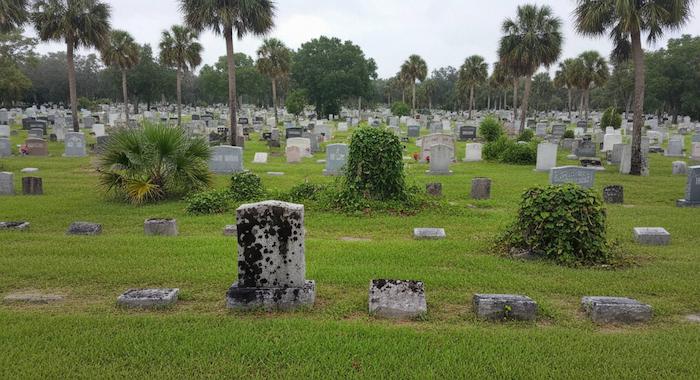
Sarasota Bay Salt Mist
Sarasota borders the Bay and the Gulf. The air is full of salt. This mist lands on granite markers. The porous stone drinks the brine. It stays wet deep inside.
The sun dries the water. The salt stays behind. It turns into crystals inside the rock. These crystals expand. They push against the stone from the inside. The face pops off (spalling). Searching for headstone cleaning services near me often suggests pressure washing. That is dangerous. It drives salt deeper. We use specialized grave site cleaning services. We use a desalination poultice. It draws the salt out chemically. This stops the internal cracking.
Sugar Sand Washout
The soil here is fine "sugar sand." It drains well but moves easily. Heavy rain hits the sand. It turns to liquid mud instantly. Water flows under concrete foundations. It takes the sand with it.
The monument loses support. It tilts or sinks. Adding dirt fails; it washes right out. For lasting tombstone repair and restoration, we stabilize the sub-base. We excavate the loose sand. We install angular gravel. The rocks lock together. They create a friction pile. This supports the weight, even in loose sand.
Hard Water Calcium Scale
Cemeteries here irrigate from the Floridan Aquifer. The water is hard. It is full of calcium. When sprinklers hit hot stone, the water dries fast. It leaves a hard white crust.
This scale dulls the polish. You cannot scrape it off without scratching the stone. We use professional cleaning stone gravestones chemistry. We use a buffered acidic cleaner. It dissolves the mineral bond safely. We rinse it away, restoring the shine.
Historic Tree Tannins
Many older Sarasota cemeteries have large Oak and Banyan trees. Leaves drop onto wet markers and rot. They release tannic acid. This dyes the stone a dark brown color.
Soap won't clean this. It is a dye, not dirt. We use specific surfactants. They break down the organic acids. We lift the stain out without scrubbing.