
Scrubbing River Algae and Calcium Scale in Aurora
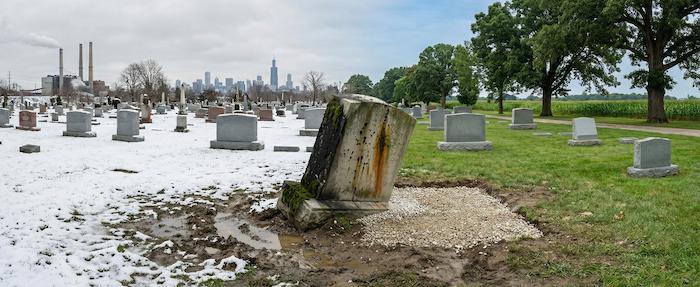
The damp air from the Fox River creates a mess in Aurora cemeteries. Walk through Spring Lake or Riverside, and you see granite that should be grey or red, but it is covered in a green fuzz. That is algae and lichen. It thrives here. It digs into the stone and holds moisture against the surface, which cracks the rock during winter.
The other issue is the sprinklers. Aurora has hard water. Every time the irrigation runs, it leaves minerals behind. Over ten years, this builds up into a thick white crust that hides the dates and names. Families searching for headstone cleaning services near me call us to kill that biological growth and dissolve the hard water deposits that turn their family memorials white.
The "White Haze" from Irrigation
You see this everywhere in Mount Olivet. The bottom half of the upright stones looks like someone sprayed it with white paint. That is calcium and lime from the city water. It bonds to the polished granite. It is harder than the stone itself.
Scraping it off with a razor blade scratches the mirror finish. We use a specialized acidic cleaner (buffered, so it won't burn the stone). We apply it to the white crust. It fizzes as it eats the calcium. We work the cleaner in with brushes. The crust is stubborn. We have to repeat the process until the grey film is gone and the polish comes back.
Green Algae and Black Lichen
The Fox River keeps the air wet. That dampness makes the stones turn green. We see algae slicks on smooth stones and crusty black lichen on the rough rock pitch. The lichen is the worst. Its roots grow deep into the granite pores. If you pull it off dry, you pull grains of stone with it.
We kill it before we remove it. We soak the stone in a biocide. This fluid penetrates the roots and kills the plant structure. The lichen turns yellow and releases its grip. Then we wash it off with water. This method cleans the stone without pitting the surface.
Sinking Markers in River Valley Clay
The ground near the river is heavy clay. It moves a lot. In January, the frost heaves the flat markers up. In April, the wet clay sucks them down. We find markers buried under two inches of sod.
We cut the grass back and dig the marker out. Putting it back on that wet clay is a mistake. It will just sink again. We remove the clay and replace it with a base of compacted gravel. Gravel drains the water away. It gives the stone a solid platform so it stays level and visible for decades.
Tree Sap and Bird Droppings
Older grounds like Riverside have massive oak trees. They drop sap, acorns, and branches. The sap lands on the limestone and turns black. It acts like glue for dirt and pollen.
Regular soap doesn't cut through old tree sap. We use a solvent that breaks down the resin. We apply it directly to the sticky spots. It dissolves the sap so we can wipe it away. We also scrub off the acidic bird droppings that eat into the marble.
Marble Sugar Decay
Acid rain hits the old white marble markers hard. It eats the binder that holds the stone together. The surface gets sugary. If you rub it, white sand falls off.
We cannot reverse the rot, but we can stop it. We clean the stone gently to remove the loose grit. Then we apply a consolidant. This is a liquid hardener. It soaks into the stone and locks the grains together. It creates a new, hard surface that resists the weather and keeps the lettering readable.
Bronze Corrosion
We see a lot of bronze plaques in Lincoln Memorial Park. When the protective coating fails, the bronze oxidizes. It turns a dull green color. It looks neglected.
We strip the bad clear coat and the green corrosion. We use brushes to get down to the healthy metal. We don't paint it; we restore the natural bronze color. Then we heat the metal and spray a fresh clear coat. This seals it. The plaque looks brand new and stays that way.
Mower Damage
Grounds crews work fast. Mowers run over the flat stones and hit the corners of the uprights. We see rubber tire marks and fresh chips on the granite.
We remove the black rubber marks with a solvent that won't dull the polish. For the chips, we use diamond pads to grind the sharp edges smooth. We can't put the stone back, but blending the chip makes it disappear to the eye and stops it from getting hit again.
Service Costs in Aurora
Cleaning thick calcium scale takes expensive chemicals and multiple visits. Digging out a sunken marker takes labor. We need to look at the stone to give you a fair number. Use our online pricing tool. You pick the cemetery, tell us what is wrong, and we show you the cost.
- Scale Removal: Dissolving hard water calcium deposits.
- Algae Cleaning: Killing and removing river mold and lichen.
- Leveling: Raising sunken markers on a gravel base.
- Consolidation: Hardening soft, sugary marble.


