
Removing Industrial Soot and Fixing Frost Heave in Chicago
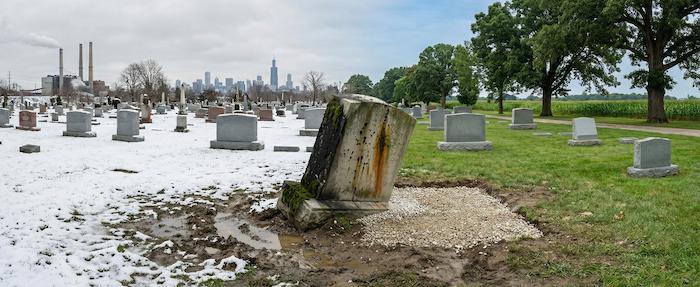
Chicago cemeteries fight a constant battle against the weather and the past. In places like Rosehill or Oak Woods, we see limestone markers that are supposed to be white, but they look like lumps of coal. That isn't just surface dirt. It is a thick shell of carbon left over from the steel mills and coal furnaces. It covers the names and dates completely.
The ground is the other trouble. The frost line in Chicago goes deep. The soil freezes solid and heaves the monuments out of place. Then the thaw comes, the dirt turns to mud, and the stones sink. We spend the spring digging out flat markers that vanished under the turf and resetting uprights that are leaning over. Families searching for headstone cleaning services near me call us to strip that black crust off the family plot or to pull a sunken marker back up to grade.
The "Black Crust" on Limestone
If you visit the older plots in Graceland, the markers look burnt. That black layer is tough. It creates a shell over the stone. Moisture gets behind that shell and can't get out. The stone stays wet and gets soft.
You cannot wash this off. A pressure washer just blows the soft stone apart, and a wire brush ruins the carving. We use a chemical poultice. It is a thick paste. We trowel it onto the black spots and let it work. It draws the carbon out of the stone without scrubbing. We rinse the sludge away, and the stone is white again. This method saves the inscription.
Frost Heave and Buried Markers
The clay soil in Chicago is wet. Winter freezes it, and the ground swells up. It lifts the headstones. When the ground thaws, it turns to mush. The heavy granite drops back down, but usually deeper than before.
We find markers tipped over or sunk six inches down. We dig the marker out completely. We get rid of the clay. We do not put it back in the hole. We replace the dirt with crushed limestone gravel. This creates a rock-solid base that drains properly. We set the monument down on the gravel, and it stays level.
Road Salt Damage
Cemeteries salt their roads heavily. The plows push that salty slush right onto the roadside graves. Salt eats marble. It breaks the stone down. The surface gets gritty, and the lettering starts to lose its edges.
We have to get that salt out. We use a lot of fresh water to rinse the stone thoroughly. If salt stays in there, the stone keeps falling apart. Once it is clean and dry, we apply a consolidant. This fluid soaks in and glues the loose grains back together. It stops the face of the stone from shedding sand.
Cleaning Granite Gravestones
It stays damp near Lake Michigan. That wet air helps lichen and algae grow on the rough parts of the granite bases. The roots dig right into the rock surface.
We never scrape dry lichen. That leaves scratches on the polish. We kill it first. We apply a cleaner that kills the roots. The growth dies and lets go of the stone. Then we wash it off. We get calls for cleaning granite gravestones that are covered in green moss. A good wash gets the stone clean without hurting the finish.
Bronze Plaque Restoration
Snow piles up on flat bronze markers. The clear coat wears off. The water hits the bare metal, and it turns green. You can't read the names, and the plaque looks like scrap metal.
We strip off the bad coating and the green corrosion. We scrub it down until we see clean brown bronze. Then we heat the metal and spray a new clear coat on it. This seals the bronze. It keeps the snow off the metal so it stays brown and legible.
Mower Damage Repair
Landscaping crews have a lot of ground to cover. They hit the stones. We see black tire tracks across the flat markers and chips on the corners of the uprights.
We use a solvent to wipe the rubber marks off. It takes the tire residue off without harming the granite. For chips, the piece is gone, but we can fix the look. We grind the sharp edges down with a diamond pad. Smoothing the chip makes it less noticeable and stops the mower blade from catching that spot again.
Service Costs in Chicago
Digging out a sunken marker takes labor. Removing a century of carbon soot takes specific materials. We need to see the stone to give you a number. Use our online tool. You choose the cemetery, upload a photo, and we give you the price.
- Soot Removal: Stripping black industrial buildup.
- Leveling: Digging out and resetting markers on gravel.
- Salt Removal: Washing out road salt.
- Bronze Care: Cleaning oxidation and sealing metal.


