
Fixing Tilted Markers and River Mold in Elgin
Elgin cemeteries fight two things: the river dampness and the steep hills. The Fox River valley stays wet. In places like Bluff City or Mount Hope, the grey granite turns green. That is algae. It grows fast here. It covers the inscriptions and digs into the stone surface.
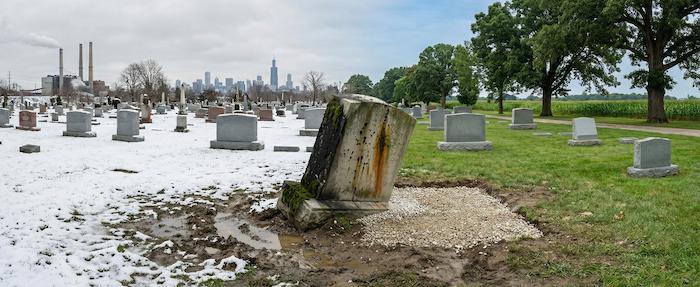
The other issue is gravity. Many Elgin cemeteries have steep sections. Heavy rain erodes the soil on the downhill side. The stones start to lean. Eventually, they tip over. Families searching for headstone cleaning services near me call us to wash off that green river mold and to reset the heavy monuments that are sliding down the slopes.
Leaning Monuments on Hillsides
Bluff City Cemetery is steep. Erosion undermines the foundations. The dirt washes out, and the stone tips downhill. This is dangerous. A falling headstone weighs enough to crush a person.
We fix the foundation. We dig out the low side and jack the monument up until it is level. We don't just shove dirt back under it; rain will wash dirt away again. We pack the void with angular crushed gravel. The gravel locks together and lets water run through without moving. The stone stays upright.
River Algae and Lichen
The damp air feeds biological growth. We see slick green algae on the flat markers and crusty orange lichen on the rough rock bases. The lichen is tough. Its roots grow right into the granite pores. If you scrape it off dry, you take pieces of the stone with it.
We kill it first. We soak the stone in a biocide that penetrates the root system. The plant life dies and releases its grip on the rock. Then we wash it away with water. We get calls for cleaning granite gravestones that look like mossy boulders. After we treat them, you can read the names again.
Hard Water Calcium Crust
Elgin water is hard. The cemeteries water the grass constantly. The sprinklers hit the stones and leave minerals behind. Over time, this builds up into a thick white crust. It looks like white cement splatter on the dark granite.
You cannot scrub this off with soap. It is bonded to the stone. We use a buffered acidic cleaner. We apply it to the white haze. It fizzes as it dissolves the calcium. We scrub the residue away with soft brushes. It usually takes a few passes to get through years of buildup, but we get down to the polished surface without burning the stone.
Removing Tree Sap
Old oaks and maples cover the grounds here. They drop sticky sap. Dirt and pollen stick to it, forming black tar spots on the markers. It bakes in the sun and gets hard.
We use a solvent made to break down organic resins. We apply it to the black spots. It turns the hard sap back into a liquid so we can wipe it off. This cleans the stone without using abrasives that would scratch the mirror finish.
Sinking Flat Markers
The clay soil in the flatter sections gets soft in the spring. Heavy flat markers sink into the mud. The grass grows over the edges, and the marker disappears.
We cut the sod back and lift the stone out. We remove the mud underneath. We replace it with a pad of crushed gravel. This creates a solid base that drains well. We set the marker back down flush with the ground. It stops sinking because the gravel holds the weight better than wet clay.
Limestone Erosion
Acid rain hurts the old limestone markers. It eats the binder that holds the stone grains together. The surface gets sugary. If you touch it, sand falls off.
We stop the stone from falling apart. We clean the surface gently to remove the loose grit. Then we apply a consolidant. This fluid soaks deep into the stone and hardens. It glues the grains back together. The stone becomes solid again, and the carving stops eroding.
Restoring Green Bronze
Bronze markers oxidize in the weather. The clear coat peels off, and the metal turns chalky green. It looks neglected.
We strip the failed coating and the green corrosion. We scrub the metal down to the clean brown bronze. We don't paint it. We restore the natural metal. Then we heat it and spray a new high-grade clear coat. This seals the bronze against the snow and rain.
Fixing Mower Chips
Landscapers work fast. They hit the stones. We see fresh chips on the corners of the granite bases and black tire streaks on the flat markers.
We wipe the rubber marks off with a solvent. For chips, the stone is gone, but we can fix the appearance. We grind the sharp edges down with diamond pads. Smoothing the chip blends it in and prevents the mower blade from catching that spot again.
Service Costs in Elgin
Leveling a hillside monument takes a crew and equipment. Removing thick calcium scale takes specific chemicals. We need to look at the stone to give you a number. Use our online pricing tool. Pick the cemetery, show us the stone, and we give you a quote.
- Leveling: Resetting tilted markers on hillsides.
- Algae Removal: Killing river mold and lichen.
- Scale Cleaning: Dissolving hard water mineral crust.
- Consolidation: Hardening eroding limestone.


