
Fixing Leaning Monuments and River Algae in Peoria
Peoria cemeteries fight a losing battle against the landscape. The Illinois River valley keeps the air heavy and wet. That dampness covers the granite in Springdale and St. Mary's with green slime and black mildew. It grows fast, and it hides the names on the markers.
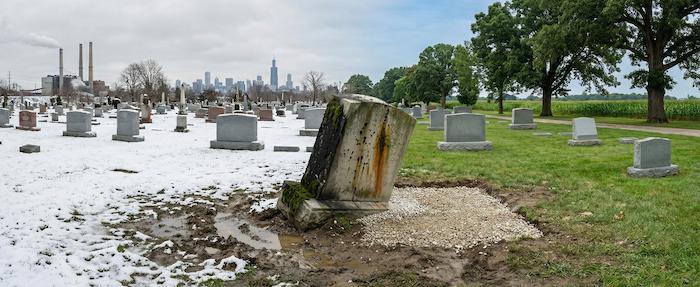
The other problem is the terrain. Springdale is massive and full of steep hills. Rainwater rushes down those slopes and washes the dirt out from under the heavy monuments. They start to lean downhill. Families searching for headstone cleaning services near me call us to wash off that green river scum and to reset the monuments that are sliding down the bluffs.
Leaning Stones in Springdale
Gravity pulls hard on the hillside plots. As the water erodes the soil, the foundation gives way on the low side. The monument tips. If it leans too far, it falls and breaks.
We fix the base to stop the slide. We dig out the low side and use jacks to lift the monument back to level. We don't put the loose dirt back in. We pack the void with angular crushed gravel. This creates a locking base that drains water instead of washing away. The stone stands straight again.
Cleaning River Algae
The river valley traps humidity. That moisture feeds the algae and lichen. We see polished grey granite that looks fuzzy and green. Rough-cut stone bases get covered in crusty orange lichen. The roots of this growth dig into the stone pores.
Scraping it dry damages the stone. We kill it first. We soak the marker in a biocide. It kills the roots inside the pores. The algae dies and turns into a brown sludge. We wash it off with water. We get calls for cleaning granite gravestones that look like part of the lawn. After we treat them, the stone is clean and the biological damage stops.
Industrial Soot Removal
Peoria has a long industrial history. Decades of factory smoke settled on the older limestone markers. It hardened into a black carbon crust. It looks like tar. It plugs the pores. Water gets trapped inside. The stone stays wet and turns to mush.
A garden hose won't move this. It is bonded to the stone. We use a chemical poultice. We apply a thick paste to the black areas. It sits there and dissolves the carbon. It pulls the stain out of the rock. We rinse it away, and the stone turns white again. This saves the carving from being lost under the grime.
Sinking Flat Markers
The clay soil on the bluffs moves when it freezes. It heaves the flat markers up in January and sucks them down in April. We find markers buried under inches of mud and grass.
We cut the sod back and dig the stone out. We dump the mud. We swap the heavy clay for crushed gravel. Gravel drains the water away. The ground stops heaving, and the marker stays put. We set it flush with the turf, and it remains visible.
Consolidating Soft Limestone
Acid rain hurts the old limestone and marble markers. It eats the binder that holds the sand grains together. The surface gets sugary. If you rub it, the stone falls apart.
We stop the erosion. We clean the loose grit off. Then we soak the stone in a consolidant. This fluid penetrates deep and hardens. It glues the grains back together. The stone becomes solid again, and the inscription stays readable.
Restoring Green Bronze
We see a lot of bronze markers in Parkview. The snow sits on them all winter. The clear coat peels, and the bronze turns green. It looks like neglected scrap metal.
We strip the failed coating and the green corrosion. We scrub the metal down to the clean brown bronze. We don't paint it. We restore the natural finish. Then we heat it and apply a new industrial clear coat. This seals the metal against the weather.
Fixing Mower Chips
Maintenance crews move fast. They hit the stones. We see fresh chips on the corners of the granite bases and black tire streaks on the flat markers.
We wipe the rubber marks off with a solvent. For chips, we can't replace the missing piece, but we can fix the look. We grind the sharp edges down with diamond pads. Smoothing the chip blends it in and stops the mower blade from catching that spot again.
Service Costs in Peoria
Leveling a hillside monument takes heavy equipment. Removing thick carbon crust takes specific materials. We need to see the stone to give you a price. Use our online pricing tool. Pick the cemetery, upload a photo, and we give you a quote.
- Leveling: Resetting leaning markers on hillsides.
- Algae Removal: Killing river mold and lichen.
- Soot Removal: Stripping industrial carbon crust.
- Consolidation: Hardening eroding limestone.


