
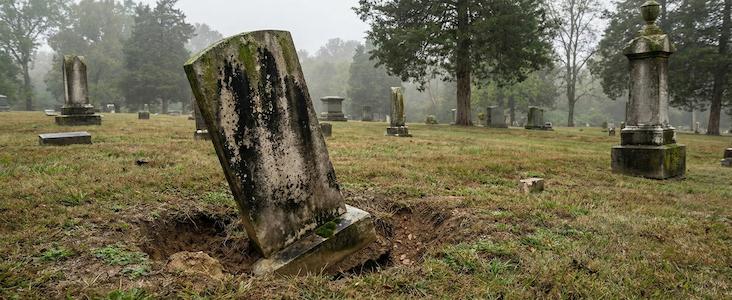
Karst Sinkhole Settling
Kentucky sits on limestone. Groundwater eats the rock underneath. This creates sinkholes. We see ground drop out from under monuments constantly, especially near cave zones.
The foundation hangs over empty air and snaps. Shovel dirt into the hole, and it just washes away next rain. It is not a fix. For tombstone repair and restoration, we excavate until we hit solid bearing. We pack a deep stone base to bridge the gap. This keeps the marker level even if the soil drops again.
Coal Dust Grime
Eastern Kentucky has a coal dust problem. The dust is greasy. It sticks to everything. It settles on the rough rock pitch of the monuments.
Rain does not touch it. The sun bakes the grease into the stone pores. It builds up a black, oily layer that grabs more dirt. Soap just smears it. We use industrial degreasers for grave site cleaning services. We cut the oil bond chemically. We lift the carbon out of the rock texture so it looks clean again.
Ohio Valley Black Algae
The Ohio River Valley traps wet air. That dampness feeds black algae colonies on porous stone.
This growth turns the headstone black. It looks like soot, but it is alive. It roots into the stone face. Pressure washing forces water into the stone and causes flaking. We use biological cleaners for headstone cleaning services near me. We kill the algae roots. The black stain releases its grip and rinses away naturally.
Black Walnut Stains
Black Walnut trees grow in many of our cemeteries. They drop heavy green husks in the fall.
When these husks rot, they leak a dark, iodine-like dye. It leaves a jet-black stain on the marker. It is highly acidic and burns into marble. Bleach does not remove it. We use a drawing poultice during cemetery plot maintenance. We pull the tannin dye out of the stone pores to restore the white surface.
Limestone Sugaring
Many historic markers in Kentucky are made of local soft limestone. Acid rain eats the binder in the stone.
The surface turns to powder. If you rub it, sand comes off. We call this "sugaring." Any abrasive cleaning destroys the inscription immediately. We use soft bristles and stone consolidants. We soak the stone to harden the surface grains. This stops the erosion and saves the lettering.
Winter Freeze Damage
Our winters are wet. We get freezing nights after rainy days. Rain fills hairline cracks in the stone.
Ice forms and acts like a wedge. It pops the face of the stone off in sheets. We check for these cracks at every visit. We seal them to keep water out before the stone splits.
Moss and Lichen
Shaded areas in Kentucky grow thick moss pads on the base of monuments.
Moss acts like a wet sponge against the stone. This constant wetness rots the granite surface. Pulling moss off takes the surface grit with it. We treat the growth chemically during cleaning stone gravestones. The moss dies and dries up, allowing us to brush it off safely.