
Consolidating Crumbling Limestone and Cleaning Hard Water Scale in Georgetown
Georgetown sits on a limestone shelf. This rock defines the area. It’s in the water, the soil, and the cemeteries. In historic grounds like Georgetown Cemetery, the old markers are carved from this local stone. It is soft. After a hundred years of Kentucky weather, the binder that holds the stone together dissolves. The surface turns to powder. If you run your hand across it, the inscription rubs off like sand.
The water here is hard. It is full of dissolved calcium. Crestlawn Memorial Gardens irrigates heavily. Every time the sprinklers run, they leave a mineral deposit. The sun bakes this residue onto the stone. It forms a hard white line across the bottom of the markers that ruins the polish. Families searching for headstone cleaning services near me call us to save their crumbling limestone markers and to burn that stubborn calcium haze off their polished stones.
Stopping Limestone "Sugaring"
Old limestone markers rot from the outside in. The surface grains lose their grip. We call this "sugaring." Scrubbing these stones destroys them. A pressure washer would erase the name entirely.
We save them with chemistry. We clean the surface with a biocide foam that kills mold without rubbing. Once it is clean and dry, we saturate the stone with a consolidator. This is a liquid hardener. It soaks deep into the rock and replaces the natural binder. It locks the sand grains back together. The stone stops shedding dust immediately.
Dissolving Hard Water Scale
Georgetown water leaves a white mineral haze. It bonds to polished granite and bronze. It dulls the reflection and makes the stone look grey. Scrapers just scratch the polish.
We use a buffered acid to remove it. We paint the acid onto the white deposits. It fizzes as it eats the calcium. We keep working it until the crust dissolves. We rinse it thoroughly. The granite comes out dark and shiny again.
Leveling Stones in Karst Soil
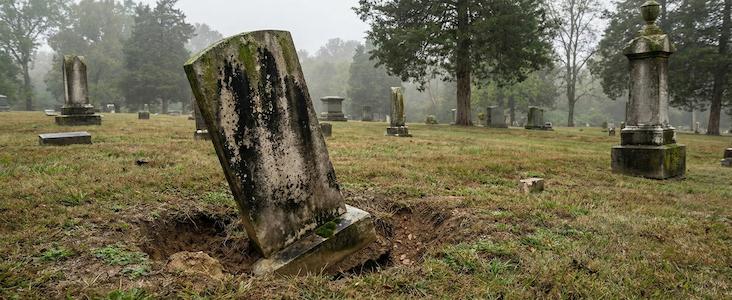
The ground here is full of sinkholes and soft spots. Monuments settle unevenly. We see stones tipping backward or sinking deep enough to hide the family name.
We fix the foundation. We lift the monument. We dig out the mud that failed. We fill the hole with crushed angular gravel. This creates a bridge over the soft soil. We tamp it solid and reset the stone. Gravel doesn't expand when the ground freezes, so the stone stays flat.
Killing Agricultural Lichen
We are surrounded by farmland. The wind carries dust and fertilizer. This feeds lichen. We see thick orange and grey scabs growing on the rough rock bases. These organisms dig roots into the stone.
We kill them. We soak the growth in a heavy biocide. The lichen turns to mush and lets go of the rock. We wash it off. This clears the stone without us having to use wire brushes, which leave rust marks.
Restoring Oxidized Bronze
Humidity in the Ohio Valley destroys the coating on bronze markers. The metal turns green and chalky. You can barely read the dates.
We strip the corrosion. We sand it down to bare, bright bronze. We use a torch to heat the metal. This dries out the pores. We spray a high-grade clear coat while the plaque is hot. It seals the metal instantly. The marker stays dark and readable for years.
Repairing Mower Scuffs
Mowers run tight to the stones. They leave black rubber streaks and chip the edges of the granite. It makes the plot look neglected.
We melt the tire marks off with a solvent. For the chips, we use diamond files. We grind the sharp, broken edge into a smooth bevel. It looks deliberate and finished.
Service Costs in Georgetown
We don't need to visit the cemetery to give you a price. We have fixed, transparent pricing for all our services, including sinkhole stabilization and limestone consolidation. Check our subscription builder to see the exact cost for your plot.
- Consolidation: Hardening crumbling limestone.
- Scale Removal: Dissolving hard water calcium deposits.
- Leveling: Lifting stones in soft karst soil.
- Bronze Care: Refinishing oxidized markers.


