Cleaning Swamp Mud and Mold in Michoud
Michoud and New Orleans East are built on soft ground. You dig down two feet, and you hit water. That makes caring for headstones tricky. The ground here is affectionately called "gumbo mud." It shifts constantly. Heavy granite markers and concrete copings don't stay level for long. They sink into the soft earth or tip sideways after a heavy rain.
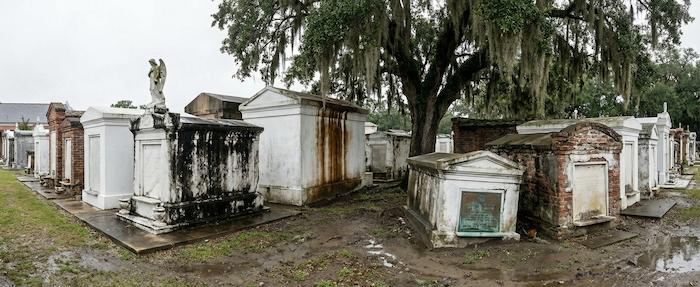
Then you have the humidity. It stays hot and wet here for nine months a year. That creates a perfect breeding ground for black algae and green slime. You see white marble tombs that have turned completely black from mold. Families searching for headstone cleaning services near me call us to bleach out that deep black stain or to jack up a tomb that is slowly sinking into the swamp.
The Sinking Ground (Subsidence)
The biggest problem in this part of Louisiana is that the ground is like pudding. It doesn't hold weight well. We see flat markers that have disappeared completely under the mud. Even the large raised tombs start to lean as the soil compresses underneath them.
We spend a lot of time lifting things back up. We dig out the sunken side and use hydraulic jacks to level the monument. Then we pump a slurry of mud and concrete underneath, or we pack it with crushed limestone. We have to create a solid footprint so the stone stops sinking.
Black Algae and Mildew
The air here is thick. The moisture clings to the stone surfaces. That constant dampness feeds the black algae. It latches onto the concrete and limestone and grows deep. It creates a hard, dark layer that looks just like industrial soot, but it doesn't wipe off.
Soap won't move this stuff. It might clean the surface dirt, but the roots stay alive inside the rock. We use a heavy-duty biological cleaner. We soak the stone and let it sit. It kills the growth all the way down. When we wash it off, the stone turns white again because the roots are dead.
Rapid Vegetation Growth
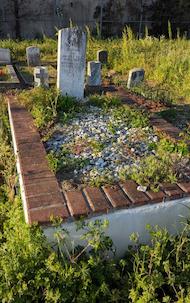
Things grow fast in the heat. Grass and vines can cover a flat marker in two weeks during the summer. We see plots where the "creeping charlie" vine has grown right over the face of the headstone, hiding the name.
We have to cut this back by hand. If you rip the vines off, they can pull the face of the stone with them. We trim them carefully and treat the area to stop them from coming back so fast.
Water Lines and Flooding
After a storm, the water sits high. When it drains away, it leaves a dirty brown line across the tombs. That is stained river mud and tannins from the leaves. It dyes the stone brown.
We use a clay paste to treat these stains. We pack the material over the brown lines and let it dry. As the paste hardens, it draws the muddy color out of the stone chemically. It lifts the stain without hurting the inscription.
Service Costs in Michoud
Lifting a heavy concrete tomb is a construction project. Removing years of thick black mold requires expensive cleaners. I can't give you a fair number until I see the job. We have an online tool that helps. You pick the cemetery, tell us if the stone is sinking or dirty, and you get a clear price instantly.
- Leveling: Raising markers sinking into the gumbo mud.
- Algae Removal: Killing black mold and green slime.
- Flood Cleanup: Removing water lines and mud stains.
- Vine Control: Clearing rapid overgrowth from plots.