
Clay and Pollen in Mid-Missouri
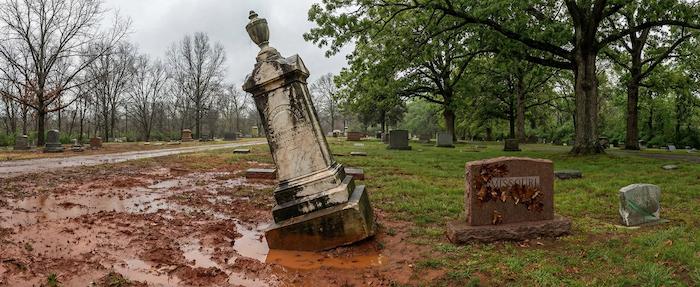
The ground in Columbia is heavy clay. It gets sticky when wet and rock-hard when dry. This soil movement is hard on foundations.
In older cemeteries like Columbia Cemetery or Jewell, we see stones leaning at bad angles. The clay heaves them out of the ground. On top of that, our heavy pollen season coats everything in yellow dust that turns into black grime. Families searching for headstone cleaning services near me call us to get the stones level and clean off the seasonal buildup.
Fighting the Clay Heave
Mid-Missouri clay holds water. When it freezes, the ground swells and shoves the stone upward. When it thaws and dries, the earth shrinks away.
The headstones ride this moving dirt. They tilt, twist, and sink. Putting more dirt under a leaning stone is a waste of time. The clay will just move it again next winter. We dig the heavy soil out. We replace it with a deep bed of crushed, angular stone. The stone drains water away from the base. The frost can't grab the gravel, so the marker stays flat.
The Pollen-to-Mold Cycle
Spring in Columbia means yellow dust everywhere. Oak and Hickory trees drop tons of pollen. It lands on the markers and sticks.
By summer, that organic layer feeds a hard, black mold. It looks like soot. A garden hose won't touch it; the grime is baked on. We use a biological cleaner to break the bond. We scrub the dead residue off by hand to get the stone clean again.
Limestone "Sugaring"
The historic sections are full of soft, white limestone. After 150 years, the binder in the stone is failing.
The surface turns to white powder. If you run your hand over it, it feels like sugar. Brushing this stone destroys the inscription. We don't scrub these. We apply a stone consolidant. This liquid soaks into the rock and hardens inside. It locks the grains back together. The stone stops dusting, and the writing stays legible.
Lichen on Rough Granite
Many monuments here have "rock pitch" edges—that rough, natural look. That texture catches moisture and spores.
Lichen grows deep into these rough spots. It forms grey and green patches that are hard to remove. Scraping tears up the stone. We kill the lichen with a biocide. The roots die and let go of the rock. We wash the dead growth away with low pressure, leaving the rough edges clean and undamaged.
Hard Water Haze
Memorial Park and other modern cemeteries water their grass constantly. The groundwater here leaves calcium behind.
This creates a white, cloudy haze on polished granite. It dulls the reflection and hides the lettering. Ordinary cleaners won't touch mineral deposits. We use a buffered acidic cleaner. It dissolves the calcium crust on contact. We rinse it fast to protect the polish, and the stone looks dark and shiny again.
Grass and Weed Trimming
The grass grows fast in Missouri. In the busy season, mowers can't get close enough to the markers without hitting them.
This leaves a ring of tall grass and weeds hiding the base. It traps dampness against the stone. We trim this overgrowth by hand. We clear the grass away from the base to let air circulate. This dries the stone out and slows down the moss growth.
Restoring Bronze Plaques
Bronze markers don't last forever in this humidity. The clear coat peels off, and the metal turns chalky green.
We strip the damaged coating and the corrosion. We polish the metal down to the raw bronze to make it look like gold again. Then we spray a new, industrial-grade lacquer. This seals the bronze against the rain and sun for years.
Service Costs in Columbia
Fixing a stone stuck in heavy clay takes labor and materials. Washing off pollen is faster. We check the site to see what needs to be done before we give you a price.
- Leveling: Resetting tilted stones on a stable gravel pad.
- Biological Cleaning: Scrubbing off black pollen mold and lichen.
- Consolidation: Hardening soft limestone to stop crumbling.
- Bronze Refinishing: Stripping and sealing oxidized markers.


