
Stone Care in the River City
St. Charles sits right on the Missouri River. The humidity here destroys stone. The soil is either messy river silt or heavy bluff clay. Both are bad for foundations.
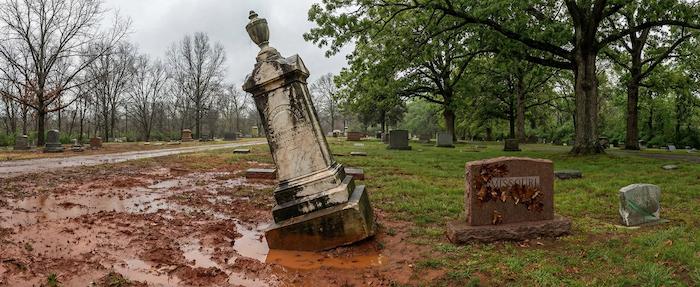
Go to St. Charles Borromeo or Oak Grove, and you see the problem. Old sandstone markers split open. Floodwaters leave hard mud cakes on the bases. Families searching for headstone cleaning services near me call us when they see their ancestors' stones turning black or sinking into the soft river soil. We scrub off the river grime, stabilize the soft ground, and stop the old stone from falling apart.
River Valley Algae
The river keeps the air wet year-round. This dampness feeds black algae. It covers the headstones in a dark, slimy layer.
This isn't just ugly; it ruins the stone. The algae keeps the surface wet. In winter, that water freezes and pops the granite polish off. We don't pressure wash this; that just drives spores deeper. We use a heavy-duty biocide. It soaks in and kills the root system. The algae dies and washes off, and the stone finally gets dry.
Sandstone Delamination
You see a lot of brown sandstone in the older French sections. This stone is built in thin sheets.
Water gets between these sheets. When it freezes, the ice pushes them apart. We call this delamination. The face shears off in big chunks. Once it falls, you can’t put it back. We inject a bonding agent into the cracks. This seals the stone so water can't get in to cause more damage.
Flood Silt and Mud
Cemeteries near the river bottoms go underwater during high season. The river dumps a load of silt on the markers.
The sun turns this mud into concrete. It fills the lettering and stains the base. You can't just hose it off. We have to soften the mud chemically to lift it without scratching the stone. We gently pick the dirt out of the letters by hand. We remove the flood line so the monument looks respectful again.
Clay Heave on the Bluffs
Up on the bluffs, the soil is red clay. Wet clay heaves up. Dry clay cracks open. The ground never stops moving.
This rocks the headstones back and forth until they tip over. We see markers leaning dangerously or sunken so deep the dates are gone. We dig out the clay. We replace it with a deep footer of compacted angular gravel. Gravel drains the water and locks the stone in place, so the moving ground doesn't grab it.
"Sugaring" Limestone
The oldest markers in St. Charles are soft white limestone. Acid rain dissolves the natural glue holding the stone together.
The surface turns to powder. It rubs off on your fingers. We apply a stone consolidant. This liquid penetrates the rotting stone and re-hardens the interior. It stops the dusting instantly. The stone becomes solid again, preserving the history for the next generation.
Hard Water Calcium
Modern memorial parks use groundwater for irrigation. St. Charles water is full of calcium.
Sprinklers leave a hard white crust on the stones. It creates a cloudy haze that blocks the lettering on polished granite. Soap won't touch it. We use a specialized acid cleaner. It dissolves the mineral buildup on contact. We rinse it fast to protect the finish, and the dark color returns.
Lichen Infestation
Under the old oak trees, lichen grows in thick patches. It digs roots into the stone pores.
If you scrape lichen, you pull up pieces of the stone. It does real damage. We treat it with a biological cleaner. The chemical kills the plant down to the root. The lichen dies and lets go. The next rain storm washes the junk away.
Service Costs in St. Charles
Chipping off dried river mud is hard work. Stabilizing a splitting sandstone marker requires specialized materials. We check the condition of the stone before we give you a price.
- Flood Cleanup: Removing caked silt and river mud.
- Stone Stabilization: Treating peeling sandstone and sugaring limestone.
- Leveling: Resetting stones shifted by clay or soft soil.
- Biological Cleaning: Killing river valley algae and lichen.


