
Restoring Stone in the Gateway City
St. Louis was built on coal and clay. For a hundred years, this city burned soft coal. That smoke didn't just disappear. It settled on the limestone monuments in Bellefontaine and Calvary.
Combine that old soot with the humidity from the Mississippi River, and you get dirty, deteriorating stone. We see white marble turned completely black. We see granite covered in slick green algae. Families searching for headstone cleaning services near me often think the stone is rotten. Usually, it is just suffocating under a century of grime. We strip the carbon crusts, kill the mold, and stabilize the ground to keep these memorials standing.
The "Coal Crust" (Sulfation)
The old coal smoke contained sulfur. When it hit the limestone markers, it reacted with the calcium. It formed a black, hard shell called a gypsum crust.
This crust seals the surface. Moisture gets stuck inside and destroys the stone core. You cannot scrub this off. If you chip the black stuff, the stone comes with it. We use a chemical poultice. The paste softens the gypsum binder. We rinse the black sludge away, and the stone turns white again.
River Humidity and Black Algae
St. Louis summers are wet. That humidity clings to the granite. It breeds a specific type of black algae that looks like soot but feels slimy.
This growth acts like a wet blanket. In winter, that trapped water freezes and creates micro-cracks. We don't pressure wash this; high pressure drives the spores deeper. We use a soft-wash biocide. It kills the algae roots. The stone stays clean because we killed the growth, we didn't just push it around.
Invasive Ivy and Vines
In the historic north side cemeteries, English Ivy runs wild. It looks traditional, but it destroys masonry.
Ivy roots dig into the mortar joints of curbs and mausoleums. They act like slow wedges, pushing the stones apart. We cut the vines at the base. We never pull live vines off a stone face; that rips the surface right off. We let the plant die and dry out. Then we brush off the brittle tendrils and repoint the damaged mortar.
Freeze-Thaw Spalling
St. Louis weather is brutal on masonry. The temperature swings back and forth constantly in winter.
Water gets into small cracks. Ice forms and pops the face of the stone off. We see names flaking away. We stop this by filling the cracks with a breathable patching compound. It keeps the water out so the ice has nothing to work with.
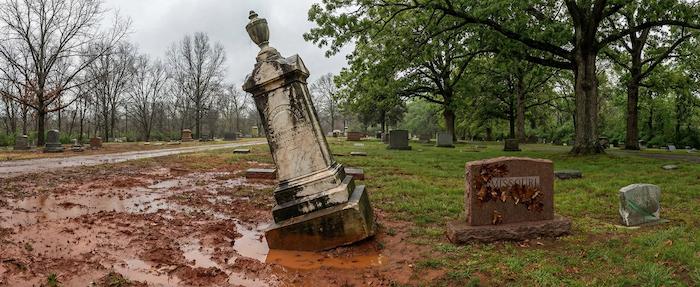
Sinking in Loess Soil
The soil along the river bluffs is Loess. It is loose and erodes easily. Heavy rains wash it out from under the monuments.
We see large obelisks tipping dangerously. Propping them up is a temporary fix. We have to rebuild the foundation. We dig a level shelf and install a deep pad of angular gravel. This locks the base in place. Gravel doesn't turn to mud when it rains. It drains instantly, keeping the stone upright.
Sweetgum and Oak Stains
In the fall, Sweetgum balls cover everything. They land on the flat markers and sit there all winter.
As they rot, they release a dark dye. It soaks deep into the pores of old marble. Regular soap won't touch it. We use a solvent poultice. It sits on the stain and sucks the pigment out. The stone clears up without us having to grind the surface.
Bronze Oxidation
At Jefferson Barracks and other military sections, bronze plaques turn green. The humid air eats through the factory lacquer.
Once the seal breaks, the copper corrodes. We restore these markers by hand. We strip the failed coating and the green oxidation. We clean the metal to a bright finish. Then we apply a specialized clear coat that stands up to the UV and rain.
Service Costs in St. Louis
Removing 100-year-old coal soot costs more than washing a modern granite marker. We inspect the stone to identify the specific type of grime before quoting a price.
- Carbon Removal: Stripping historic coal smoke crusts.
- Leveling: Resetting stones on river bluff soil.
- Vine Removal: Safely clearing ivy from historic masonry.
- Consolidation: Stabilizing flaking limestone.


