
Preserving Rimrock Sandstone and Cleaning Hard Water Scale in Billings
Billings is hard on monuments. The wind coming off the Rims blasts the cemeteries with grit. At Mountview and Holy Cross, that wind drives dust right into the stone faces. It packs the engravings tight until you can't read the names.
The water is just as bad. The irrigation here is full of minerals. It sprays the stones all summer, baking a white lime crust over the polish. We also have to be extremely careful with the old local sandstone markers. That stone is soft and rotting. If you scrub it, it falls apart. Families searching for headstone cleaning services near me call us to handle that fragile stone safely or to strip that heavy white mineral buildup off their granite.
Fragile Rimrock Sandstone
You see a lot of markers made from local sandstone in the old sections. It is terrible stone for longevity. It separates in layers. If you touch the face, big flakes fall off.
Pressure washing destroys this stone immediately. Even a stiff brush will wipe the name right off. We treat these like eggshells. We use a gentle biocide to kill the mold without scrubbing. We rinse it with low pressure. We aren't trying to make it look brand new. We just want to get the grime off without taking the stone with it.
Hard Water and Alkali Scale
In the summer, the sprinklers soak these stones every day. When that hard water hits hot black granite, it flashes off instantly. The water leaves, but the white alkali stays behind. It bakes onto the stone, forming a stubborn white crust that hides the polish.
Soap won't touch this stuff. We use a strong acid cleaner to eat the calcium. We brush it on and watch for the reaction. As soon as the white scale dissolves, we rinse it off. Speed matters. If that cleaner sits for too long, it burns the polish. We rinse it the second the scale lifts to keep the shine safe.
Sinking in River Valley Clay
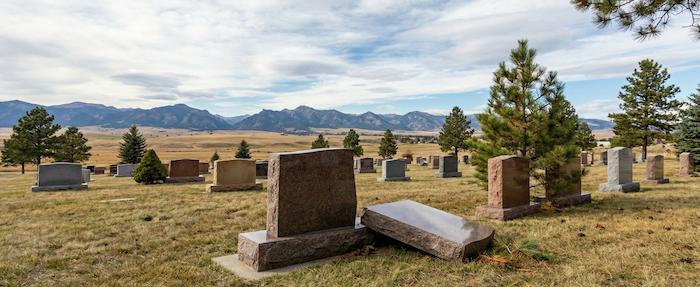
Near the river, the ground is heavy clay. When it rains, that clay turns into grease. Heavy monuments slide around in it. They sink until the grass grows over the edges, and then the mower blades start hitting the stone.
We fix this by getting rid of the clay. We dig the stone out and fill the hole with crushed angular rock. Crushed rock packs tight and drains. It keeps the stone sitting on a dry, solid base instead of floating on wet mud.
Impacted Dust and Grime
The wind drives dust deep into the engraving. On a headstone, that dirt fills up the dates and the name. It gets wet, then it bakes hard. It plugs the letters until they are flush with the surface. It makes the stone look like a blank slab.
We pick this dirt out by hand. We use wooden tools to dig the hard mud out of the letters. It is slow work. We have to clear every single groove to make the lettering readable again.
Frost Heave from Chinooks
Sudden temperature jumps—Chinooks—cause rapid thawing. The ground expands and contracts fast. This heaves flat markers right out of the ground or tilts upright stones so they look like they are about to fall over.
We reset these stones by rebuilding the foundation. We make sure there is drainage under the marker. If the ground stays dry underneath, the frost doesn't push it around as much.
Service Costs in Billings
Cleaning flaking sandstone takes patience. Removing thick mineral scale takes expensive chemicals and speed. I can't give you a fair price without knowing what I'm walking into. We have an online tool that fixes that. You choose the cemetery, tell us what needs fixing, and you get the number right there.
- Historic Cleaning: Delicate care for flaking sandstone.
- Scale Removal: Dissolving white sprinkler deposits.
- Leveling: Resetting stones moved by frost or sinking.
- Detail Cleaning: Removing impacted dust from letters.


