
Cleaning Industrial Soot and Windblown Grit in Great Falls
The wind in Great Falls never really stops. In open cemeteries like Highland and Manchester, that wind acts like a sandblaster. It drives dust and grit right into the face of the headstones. It packs the names and dates full of dirt until they disappear into the grey background of the stone.
We also deal with history here. For almost a century, the "Big Stack" pumped smoke over the town. That industrial soot settled on the older monuments at Mount Olivet and Highland. It formed a greasy, black layer that hardened over time. It isn't just dirt; it is chemical grime. Families searching for headstone cleaning services near me call us to strip that historic soot off the family plot or to dig the windblown dirt out of the engravings.
Historic Smelter Grime
The Big Stack is gone, but the soot is still here. Monuments from the mid-century are covered in a dark, greasy stain that looks like black paint. It soaked deep into the rock. It doesn't wash off with water.
We use a heavy paste called a poultice to fix this. We smear it over the stain and cover it up. The paste soaks up the grease hiding in the pores. We wait for it to dry. When we scrub that crust off, the black soot comes with it.
Windblown Grit
The wind here is brutal. It pushes fine dust deep into the rough cuts of the lettering. Rain turns it to mud, and the dry wind turns it to concrete. You can't read the inscription because the letters are filled flush with the surface.
Pressure washing risks chipping the stone. We clean this by hand. We use wooden tools to pick the packed dirt out of every single letter. It takes a long time, but it brings the shadow back to the engraving so you can read the name from the road.
Chinook Frost Heave
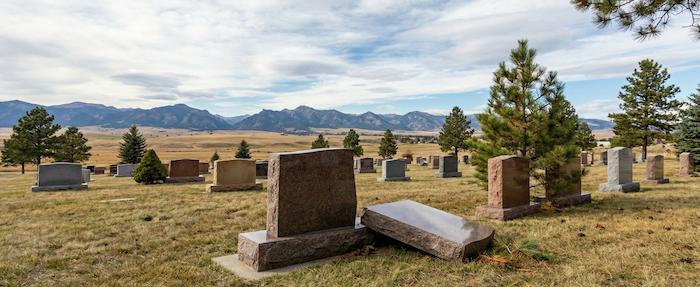
Chinook winds melt the snow in an afternoon. The ground turns to soup, then freezes solid that night. That cycle pumps stones right out of the dirt. We see flat markers heaved up inches above the grass, or uprights tipping over because the mud under them moved.
We fix this by digging out the mud. We replace it with crushed angular gravel. Gravel drains. It doesn't hold water like dirt does, so when the freeze hits, the ground under the stone doesn't expand and push the marker around.
Hard Water Scale
The sprinklers run hard all summer. When that river water hits a hot black stone, it evaporates instantly. The calcium stays behind. It bakes into a white crust that covers the polish and creates a cloudy haze.
We use a strong cleaner to melt that crust. We brush it on, let it fizz, and flush it with water immediately. You can't let it sit. Acid burns the shine if you wait too long. We flood the stone with water the second the scale lifts to protect the finish.
Lichen on Sandstone
The older stones in the area are often soft sandstone. Lichen loves this rock. It digs roots into the surface and eats the minerals. If you pull the lichen off, chunks of stone come with it.
We kill the lichen first. We spray it with a biocide. The plant dies and loses its grip. Then we gently brush the dead material away. This cleans the stone without ripping the face off.
Service Costs in Great Falls
Removing eighty years of smelter soot is a big job. Picking windblown dirt out of a name is slow work. We can't give you a quote without seeing the stone. But we have an online tool that makes it easy. You pick your cemetery, click on the problem you see, and you'll see the cost.
- Industrial Cleaning: Stripping old smelter soot.
- Detail Cleaning: Picking dirt out of letters by hand.
- Leveling: Fixing stones moved by frost heave.
- Scale Removal: Cleaning off sprinkler deposits.


