Viticulture Fungicide Runoff
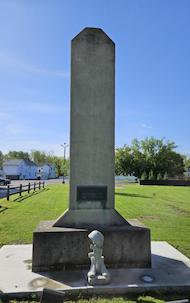
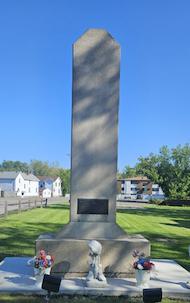
Check the base of the stone. Deep blue-green staining is not moss. It is copper. For seventy years, vineyards saturated this valley with "Bordeaux Mixture" (Copper Sulfate). The metal load remains in the soil.
Groundwater wicks the copper into the granite. Air contact triggers oxidation. This is a chemical bond. Bleach is useless here. We use specialized grave site cleaning services. We apply a chelating gel. It locks onto the copper atoms. We extract the contaminant chemically.
Canandaigua Lake Thermal Fog
The lake modifies the local climate. Cold air fronts collide with warm water. The result is dense, heavy fog ("Lake Effect").
Granite absorbs this moisture. When ambient temps hit 0°F, that pore water freezes. Ice expansion is 9%. Internal pressure spikes to 2,500 PSI. The stone face shears off. Searching for headstone cleaning services near me often leads to pressure washing. That drives water deeper. We use sealers to block the liquid entry.
Onondaga Limestone Dissolution
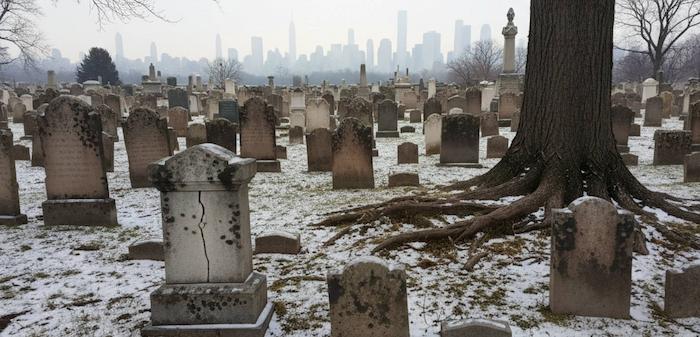
Pioneer Cemetery is deteriorating. The markers are Onondaga Limestone (Calcium Carbonate). Regional rain pH is low (acidic).
The acidity attacks the stone's natural binder. The surface texture degrades to a powder ("Sugaring"). Inscriptions lose legibility. We use a consolidant treatment. It saturates the crumbling matrix. It acts as a replacement binder to solidify the stone.
Glacial Lacustrine Clay Shift
The sub-grade is Glacial Lacustrine (Lake Bottom) clay. It is highly plastic. Wet clay expands volume. Dry clay shrinks.
This cycle destabilizes the foundation. Frost heave lifts the marker unevenly. Stones tilt or rotate. Adding topsoil adds mass and accelerates the sink rate. For permanent tombstone repair and restoration, we correct the sub-grade. We excavate the active clay. We install a gravel friction pile to break the hydraulic connection.
Routes 5 & 20 Road Salt
Routes 5 and 20 carry heavy freight. Winter maintenance relies on magnesium chloride brine. Plows spray this mixture at high velocity. The wind carries that caustic mist right into the cemetery.
The water dries off. The chloride crystals do not. They lodge in the pores. As they grow, they fracture the rock from the inside ("Sub-florescence"). We treat this with desalination poultices. These clay packs draw the ions out of the stone structure.