Locomotive Soot & Industrial Fallout
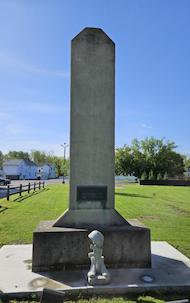
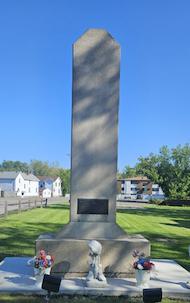
Dunkirk was home to Brooks Locomotive Works (ALCO). Thousands of steam engines were built here. Coal combustion was continuous for a century. Heavy carbon particulates saturated the air and coated St. Mary's Cemetery.
This is not simple dirt. It is a chemical crust. Carbon and sulfur bond to the stone in the humid lake air. On marble, it forms a black gypsum scab. Scrubbing is abrasive. It destroys the stone's "skin." We use specialized grave site cleaning services. We use ammonium carbonate poultices. These pastes dissolve the chemical bond. We lift the soot without mechanical force.
Lake Effect Ice Glazing
Lake Erie generates massive snow bands. Dunkirk sits in the primary impact zone. Monuments are frequently encased in ice ("Glazing").
This ice seal prevents the stone from "breathing." Trapped moisture inside the granite freezes. Expansion is 9%. Internal pressure hits 2,500 PSI. The stone face shears off (Spalling). Searching for headstone cleaning services near me often leads to pressure washing. This adds water to the freeze zone. We use hydrophobic sealers. They line the pores. They block liquid entry while allowing vapor escape.
Devonian Shale Delamination
The local bedrock is Dunkirk Shale. Many older markers use this sedimentary stone. It forms in thin layers.
Water wicks into the bedding planes. Freeze-thaw cycles act as a mechanical wedge. The stone peels like a book ("Delamination"). High-pressure cleaning destroys these markers instantly. We use ethyl silicate consolidants. These liquid binders soak into the stone. They re-glue the silica matrix. They arrest the peeling process.
Power Plant Fly Ash
The NRG power plant operated coal units for decades. Fly ash (silica and aluminum) was a byproduct. It settles on horizontal surfaces.
Fly ash is pozzolanic. It reacts with moisture to harden like cement. It bonds to the monument base. Removal requires precision. We use chemical softeners to break the pozzolanic bond without etching the underlying granite.
Shoreline Algal Bloom
Lake Erie algal blooms release airborne organic compounds. Nitrogen levels in the coastal fog are high. This feeds Gloeocapsa magma (black algae).
The algae forms a thick solar shield on the stone. Roots penetrate the mineral lattice. They excrete oxalic acid. This etches the polish. We use professional cleaning stone gravestones chemistry. Quaternary ammonium biocides terminate the root system. The biomass detaches. The biocide residue prevents regrowth.