Coastal Hydro-Saline Fracturing
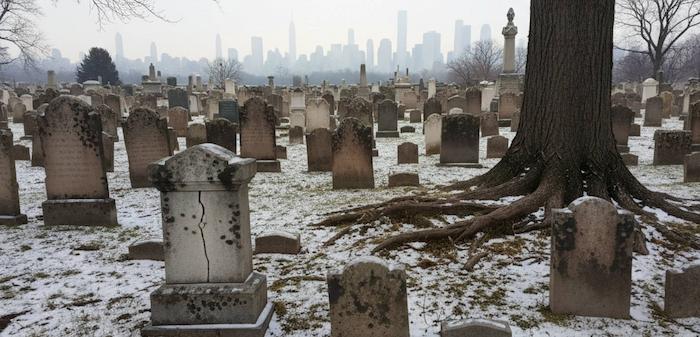
New Rochelle sits directly on the Long Island Sound. The air is full of salt mist. This aerosol settles on granite and marble markers. Rainwater pushes this salt deep into the stone pores.
The water dries out. The salt stays trapped inside. It turns into hard crystals (sub-florescence). These crystals take up more space than the pores allow. They push outward with force exceeding 3,000 PSI. This blasts the face of the stone off. The surface becomes rough and pitted.
Searching for headstone cleaning services near me often leads to pressure washing ads. On the Sound Shore, this destroys the stone. High-pressure water drives salt deeper into the material. It speeds up the decay. We use specialized grave site cleaning services. We use chemical poultices to draw the salts out. We apply breathable consolidants to block new salt from entering.
Glacial Till & Slope Washout
Local soil is Glacial Till. It is rocky and uneven. Clay pockets mix with sand and large boulders. It drains poorly. New Rochelle cemeteries are often built on these rocky ridges.
Heavy rains create fast runoff. Water rushes down the slopes. It washes fine soil away from the downhill side of the monument foundation. The concrete footer hangs in the air. The monument leans. Adding topsoil is a temporary fix; it washes out in the next storm. For permanent tombstone repair and restoration, we stabilize the slope. We excavate the downhill side. We install a friction pile of angular gravel. This locks the foundation in place.
Atmospheric Carbon Sulfation
Traffic on I-95 and the Hutchinson Parkway generates constant exhaust. Diesel soot is acidic and oily. It embeds itself into the granite texture.
On marble, this sulfur pollution chemically bonds with the stone. It creates a black gypsum crust. This is not dirt. It is dead stone holding carbon. Mechanical scrubbing destroys the inscription underneath. We use ammonium carbonate poultices. These pastes dissolve the chemical bond. We rinse the black scab away without abrasion.
Coastal Biological Encrustation
The Long Island Sound generates high humidity. Morning fog keeps the stone damp. This wet environment forces lichen and black algae (Gloeocapsa magma) to grow rapidly.
Lichen is aggressive. It drills roots into the stone matrix. It produces oxalic acid as waste. This acid eats the binder in the stone. The polish fades. The surface crumbles. We use professional cleaning stone gravestones chemistry. We apply a quaternary ammonium biocide. It soaks into the pores to kill the biological structure. The growth falls off. The biocide stays behind to stop regrowth.
Granular Disaggregation ("Sugaring")
Historic white marble markers in Beechwoods or Holy Sepulchre suffer from "sugaring." Acid rain eats the glue holding the crystals together. The stone loses strength.
The surface feels like loose sugar. Rubbing it removes the stone grains. Standard cleaning wipes the lettering away entirely. If the stone is sugaring, do not scrub. We use mineral silicate consolidants. These liquids soak into the crumbling stone. They replace the lost binder and re-harden the surface. This freezes the decay process and saves the inscription.