
Cleaning Oilfield Grime and Removing Alkali Salts in Williston
Williston air is dirty. Diesel soot and field dust mix together. It settles on the monuments in Riverview Cemetery and turns into a hard, sticky mess. This isn't normal dust. It is grease. It bakes onto the granite. Rain hits it and slides right off. The letters fill up with black sludge. You walk by and can't even see the name.
The ground is also a problem. Western North Dakota soil is full of alkali salt. The stone drinks the groundwater. The water dries out, but the salt stays inside the rock. That salt grows. It breaks the stone from the inside out. We see the face of the granite popping off in flakes. Families searching for headstone cleaning services near me call us to strip that heavy oilfield grease and to stop the salt from destroying their family plots.
Removing Sticky Industrial Dust
The dust in Williston is greasy. It packs tight into the letters. Water and soap do not cut it. Scrubbing it wet just spreads the black stain across the face of the stone.
We use a heavy degreaser to cut through the oil. We spray it on and let it soften the grime. We scrub the stone hard with stiff brushes and hose it down. The grease comes off, and the stone is black again.
Stopping Alkali Salt Damage
That white crust on the bottom of the stone is salt, not mold. It eats stone. It turns the surface into powder.
We kill the salt with chemistry. We use an acid wash to dissolve the white crust. Then we apply a thick paste to the stone. It sits there and pulls the deep salt out. We wash it off. Finally, we seal the stone so it stops drinking up the salty groundwater.
Fixing Frost-Heaved Foundations
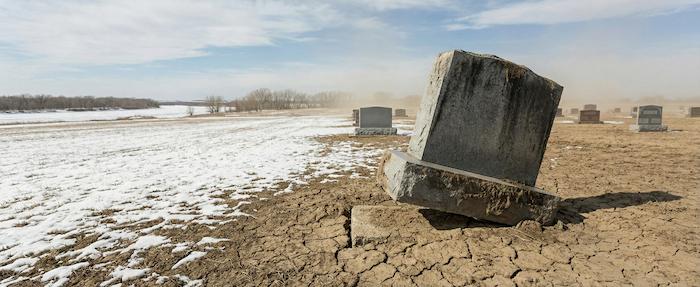
The frost goes deep here. It snaps concrete pads. We see monuments tipping over because the ground heaved and broke the foundation in half.
We replace the broken pad. We hoist the monument. We dig out the old concrete and the clay. We fill the hole with compacted angular gravel. Gravel drains. If water can't sit under the stone, ice can't form to push it up. The marker stays level.
Killing Lichen on Sandstone
Many pioneer graves are marked with soft sandstone. Lichen loves this stone. It digs roots deep into the surface. If you pull the lichen off, chunks of stone come with it.
We kill it with a biocide. We soak the growth. It dies and releases its grip. We wash it off gently. This saves the inscription. Sandstone falls apart easily; pressure washers will destroy it.
Restoring Oxidized Bronze
The wind and snow destroy the finish on bronze markers. The metal turns green and chalky. The protective lacquer peels off.
We restore the finish on-site. We strip the corrosion down to bare metal. We use a torch to heat the bronze and dry it out. We spray a new industrial clear coat on the hot metal. It bonds instantly. The plaque looks dark and new again.
Consolidating Crumbling Stone
The weather here destroys old limestone markers. The binder dissolves, and the stone turns to sand. The name simply falls off.
We stop the erosion. We saturate the dry stone with a consolidator. This fluid soaks in and hardens. It replaces the natural binder. The stone becomes solid again, preserving whatever lettering is left.
Repairing Mower Scuffs
Mowers hit the stones. We see black rubber marks and chipped edges on the granite bases.
We clean the rubber marks with a solvent. For chips, we use diamond files. We grind the sharp, broken edge into a smooth bevel. It looks finished and stops the mower from catching that spot again.
Service Costs in Williston
We don't need to visit the cemetery to give you a price. We have fixed, transparent pricing for all our services, including salt removal and frost heave repair. Check our subscription builder to see the exact cost for your plot.
- Grime Removal: Cleaning oily industrial dust.
- Salt Removal: Neutralizing alkali efflorescence.
- Leveling: Fixing frost-heaved monuments.
- Bronze Care: Refinishing oxidized plaques.


