
Cleaning Corn Harvest Dust and Resetting Stones in Mitchell
Mitchell is surrounded by fields. Harvest time is messy here. The wind drives dirt and chaff straight into town, covering the headstones in Graceland and Calvary Cemetery. That fine dirt doesn't just sit on the surface; it packs tight into the deep cuts of the names and dates. Rain turns it into a mud paste, and the summer sun bakes it solid.
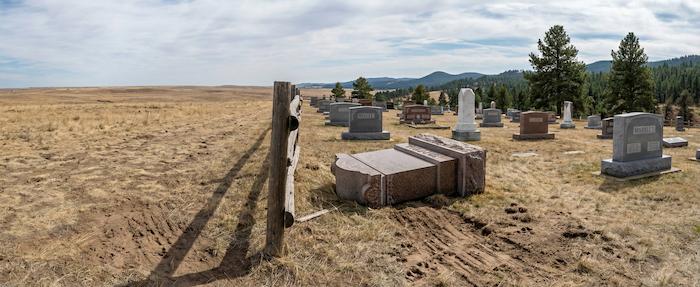
The ground here is heavy clay. It holds water. When winter hits, that wet ground pushes up. We see a lot of monuments that are leaning or flat markers that have heaved up and then settled crooked. Families searching for headstone cleaning services near me call us to dig out that packed-in harvest dust and to level out the stones that the winter freeze has moved around.
Impacted Agricultural Dust
The dust in Mitchell is fine and sticky. The wind drives it into the engraving on the granite. It builds up until the letters are flush with the face of the stone. The shadow is gone, so you can't read the name anymore. It just looks like a flat grey slab.
A hose won't move this dirt. It is packed in there like concrete. We clean it by hand. We use wooden tools to scrape the hard dirt out of every single letter. We have to be careful not to chip the stone edges. It takes a long time, but it brings the contrast back so you can read the inscription again.
Hard Water Mineral Scale
To keep the cemeteries green in July and August, the sprinklers run constantly. The water here is hard. It is full of calcium. When that water hits a hot black granite stone, it leaves a white mineral layer behind. It forms a rough, cloudy crust over the polish.
Soap won't touch this. It is a mineral deposit. We use a specific cleaner that dissolves the calcium. We brush it on and wait for the white crust to bubble up. We rinse it off immediately. You have to be fast. If you let that acid sit, it will burn a dull spot into the polish. We flood it with water to neutralize the chemical.
Frost Heave and Leaning Monuments
The winter freeze moves the ground here. The wet clay expands and shoves the monument foundation upward. When the ground thaws, the mud turns soft and the stone drops, but it never lands straight.
We fix this by fixing the base. We dig out the side that is sinking. We remove the wet clay and pack in angular crushed rock. This creates a drain under the stone. If there is no water sitting there to freeze, the ground won't heave and the stone stays level.
Lichen on Rough Stone
In the older sections, we see lichen growing on the rough-cut bases and the sides of the monuments. It grows in crusty green and orange patches. The roots dig into the pores of the rock. This traps water, which leads to freezing and cracking.
Scraping lichen damages the stone. We kill it instead. We soak the growth with a biocide. The plant dies and loses its grip on the rock. It turns to dust. We scrub the dead debris off, and the stone looks clean again.
Tree Sap and Bird Droppings
Trees in the cemetery mean sticky stones. Sap drips down and hardens into black bumps. The sun cooks it onto the granite until it feels like hard tar.
We use a solvent to soften the sap. We let it sit on the spot until the tar turns back into a liquid. Then we wipe it away. This gets the sticky mess off without scratching the polish underneath.
Service Costs in Mitchell
Cleaning impacted dust is slow, detailed work. Resetting a leaning monument in heavy clay takes labor and materials. A photo doesn't tell me enough to give you a fair quote. I need to walk the plot. There is a huge difference between washing off some bird droppings and digging out a failed concrete foundation.
- Detail Cleaning: Hand-picking impacted dust from letters.
- Leveling: Resetting stones moved by frost heave.
- Scale Removal: Dissolving white sprinkler deposits.
- Pitch Removal: Cleaning tree sap and tar.


