
Resetting Sinking Markers and Cleaning Lake Moss in Watertown
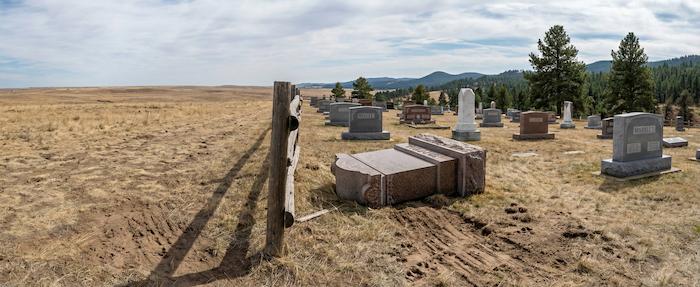
Watertown sits right between Lake Kampeska and Lake Pelican. That much water means the water table is high. The ground in cemeteries like Mount Hope stays soft. Heavy granite monuments settle quickly here. We often find flat markers that have sunk three or four inches deep. Grass grows over the top. We have to use a steel probe just to find where the family marker used to be.
The humidity from the lakes feeds the green algae. It grows thick on the monuments. You see it covering the north side of the stones in a heavy green layer. Combined with the constant wind blasting dirt into the engravings, the stones get messy. Families searching for headstone cleaning services near me call us to lift their sunken markers back to grade and to strip off the moss and plugged-up soil.
Sinking in Soft Glacial Soil
The soil here is wet heavy black dirt. It doesn't support weight well. When a heavy stone sits on wet dirt, it sinks. It usually happens unevenly, so the marker tips backward or slides off its foundation.
Prying it up is a waste of time. It will just sink again next rain. We dig the stone out. We excavate the wet mud underneath and replace it with a pad of crushed rock. We tamp that rock down until it is solid. Crushed rock locks in place and lets the water drain out. It stops the stone from sliding around in the mud.
Moss and Algae Growth
The lakes keep everything damp. In the shade, the stone never gets dry. Moss grows thick on the cold granite. That thick green mat holds water right against the stone. When January hits, that water freezes and expands, cracking the face of the stone.
We don't scrape moss. If you scrape it, you scratch the polish. We spray it with a biocide. This kills the plant down to the root. The green turns to brown dust. When the growth dries out, we brush it away. It crumbles off without damaging the granite underneath.
Impacted Windblown Dust
The wind drives dirt deep into the lettering. On a headstone, that dirt packs into the dates and the name. It gets wet, then it dries into a solid plug. It fills the letters until they are flush with the surface. You can't read the name because the contrast is gone.
Power washing is dangerous for old stone. We clean this by hand. We use wooden picks to dig the hard dirt out of the letters. It is slow work, but it clears the inscription without chipping the stone edges.
Frost Heave
Winters in Watertown are cold. The frost goes deep. When wet ground freezes, it expands. It pushes the stones up. When the thaw hits in spring, the ground turns to soup and the stones settle, but they never settle straight.
We fix this by controlling the water. We install a gravel foundation that drains. If the water can flow away from the base of the stone, the frost can't grab it and push it around.
Hard Water Scale
Cemeteries use well water or lake water for the grass. It is full of minerals. When the sprinklers hit a hot monument, the water disappears, but the white lime stays. It builds up a hard, cloudy crust over the polish.
We use a specialized cleaner to dissolve the calcium. We brush it on, watch the scale fizz away, and rinse it immediately. You have to work fast. Acid eats the polish if it sits. We wash it down with plenty of water to protect the finish.
Service Costs in Watertown
Resetting a stone in this wet soil is heavy work. We are moving mud and hauling gravel. Cleaning off thick lake moss or picking dirt out of letters takes time. We can't verify a price until we see the plot. We need to check if the foundation is cracked or if the stone is just tipping.
- Leveling: Building a gravel base for sinking stones.
- Biological Cleaning: Killing moss and algae safely.
- Detail Cleaning: Removing impacted dust from letters.
- Scale Removal: Dissolving white sprinkler deposits.


