
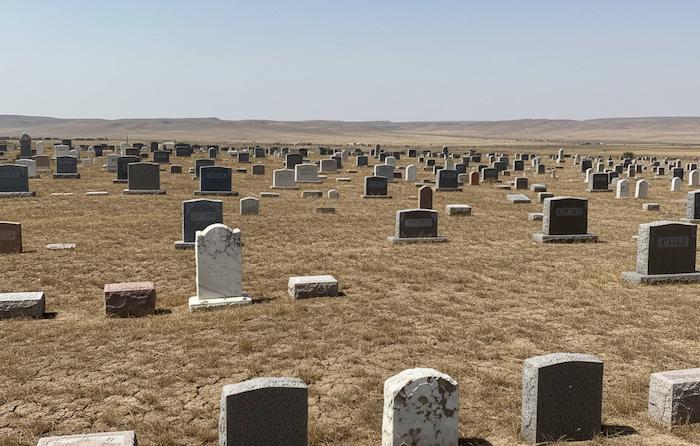
Clay Heave ("Gumbo" Soil)
Carrollton sits on Blackland clay. It is unstable ground.
When it rains, this clay swells up. In a drought, it cracks open. This constant movement snaps concrete footers. Monuments tilt or sink into the gaps. Adding dirt is a waste; the cracks just swallow it. For permanent tombstone repair and restoration, we dig past the active clay. We install gravel piles to absorb the shift.
Highway Diesel Film
We are boxed in by I-35E, the Bush Turnpike, and Hwy 121. Truck traffic is heavy.
Diesel soot coats the granite. It makes a greasy film. Water won't cut it. Scrubbing just spreads the oil around. We use industrial degreasers. They cut through the grease so we can wash the soot away completely.
Hard Water Scale
Cemeteries here water the grass constantly. The water is full of calcium.
The sun bakes the water off. It leaves a white crust on the base. It looks like frost, but it is rock hard. Scrapers scratch the polish. We use specialized descalers for cleaning stone gravestones. They dissolve the minerals so we can hose them off.
Crepe Myrtle Sap
Landscapers plant Crepe Myrtles everywhere here. They drop sticky sap.
This sap coats the headstones. Black mold grows right on top of it. It looks like tar. Soap won't touch it. We use alkaline cleaners for grave site cleaning services. We strip the sticky varnish off without burning the stone.
Bronze Plaque Corrosion
Many parks here, like Restland, use bronze markers. They turn green.
Fertilizers and acid rain eat into the metal. This is "Bronze Disease." It destroys the lettering. We strip the corrosion down to bare metal. Then we seal it with hot wax to stop the air from eating it again.