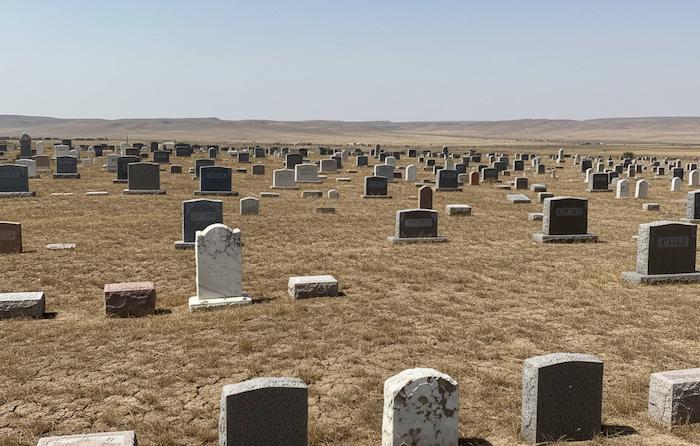
Texas is big enough that a headstone battling Panhandle wind and one sitting in a Houston bayou might as well be in different countries. Every one of Texas's 8,124 cemeteries gets the same $2,000,000 liability coverage and ICCFA membership on every Tending visit, from the dry plains in the west to the humid coastline in the east. The visit itself looks the same whether a family lives nearby or manages everything from out of state through the Tending app. Which fix actually helps a Texas headstone depends on which part of the state it's in.
How Texas Geography Shapes Headstone Damage
West Texas wind packs fine sand directly into engraved letters. Gulf Coast humidity works on granite and bronze through two different chemistries at once, and Central Texas clay swells and shrinks hard enough with the seasons to crack a foundation that isn't built for it.
West Texas Silica Erosion and Headstone Lettering Repair
Fine silica sand blows across West Texas most of the year. It settles into the carved grooves of engraved lettering and stays there, since wind can clear a flat stone surface but not a recessed one. Each gust that follows drags the trapped sand back and forth across the letter's edge, and after enough seasons the edges round off and the inscription becomes harder to read. Letters on the windward face of a monument, the side that takes the brunt of the prevailing wind, tend to wear fastest, since that's where the most sand-laden gusts land directly. Direct sun raises a dark granite surface well above 160 degrees at midday. The stone's interior lags dozens of degrees behind that same reading, and the two layers expand at different rates. Over years, the resulting mismatch works thin sheets of granite loose from the face. This kind of thermal spalling shows up first on the darkest, most sun-exposed stones, since dark granite absorbs the most heat of any monument color in the same cemetery. Headstone lettering repair reopens the affected grooves down to solid stone and packs them with fresh enamel, then a UV-resistant coating seals the repair against direct sun.
Gulf Coast Humidity and Bronze Marker Restoration
Cemetery stone along the Gulf Coast rarely gets a full dry stretch between storms. Black algae colonizes the surface during wet periods, and the acidic byproduct wears down the polish on granite within a year or two of unchecked growth. Bronze plaques face a separate coastal threat. Salt carried in from the water accelerates oxidation on the metal, and green corrosion can cover a casting within a handful of years. Plaques within a mile or two of open water tend to corrode fastest, since salt concentration in the air drops off quickly with distance from the coastline. Tending's bronze marker restoration strips the oxidation down to raw bronze and applies a marine-rated coating built to hold up against salt air specifically. Painted lettering on affected monuments fades under the humidity too, and repainting it is usually part of the same visit.
Black Gumbo Clay and Headstone Repair
Central Texas sits on Black Gumbo clay, soil that can shift several inches within a single season depending on rainfall. Black Gumbo, officially Texas's state soil, can swell by as much as 30 to 40 percent in volume when fully saturated. A heavy rain event saturates the clay, and the resulting swelling pushes upward hard enough to crack a concrete footing that wasn't reinforced against it. A dry summer reverses the mechanics. Black Gumbo contracts and splits into deep fissures during a drought, cracks that can run two to four inches wide and reach nearly two feet down into the ground, and a monument base that stood solid in spring can lose its support by fall. Headstone repair in this soil means addressing the ground first. Tending removes the unstable clay from around the foundation, sets deep friction piles below the active layer, and rebuilds the base on footing that won't shift with the next rainy season or drought. Friction piles anchor the foundation below the depth where seasonal moisture ever reaches, giving the base something stable to rest on no matter what the clay above it is doing.