
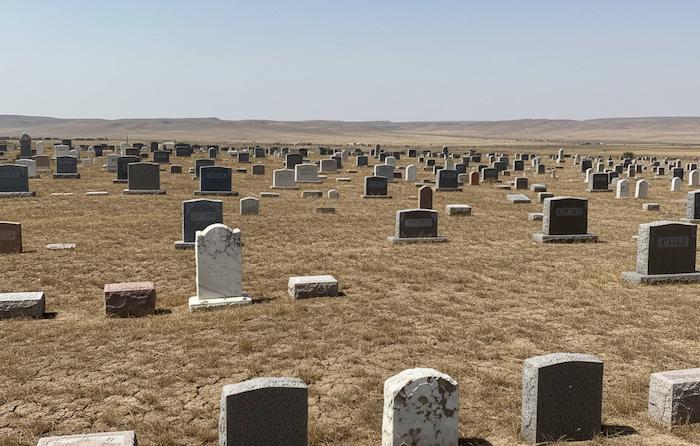
Balcones Fault Monument Shift
Drive across Austin on I-35 and you cross a geological boundary most people never notice: the Balcones Fault, where the ground on one side moves nothing like the ground on the other. East of the fault, the soil is heavy clay that swells and pushes upward with every rain. West of the fault, thin soil sits over solid limestone bedrock and washes away in a hard storm, taking a footing's support with it. A monument on either side can end up unstable, just for opposite reasons. Tending's crew reads the soil before choosing a fix: clay ground gets excavated and rebuilt with stable road base, and bedrock ground gets anchored straight into the limestone underneath. This is one of the few places where headstone cleaning services near me search results can lead to two completely different repairs, depending on which side of I-35 a cemetery falls on. A monument that has already cracked or tilted from either kind of ground movement gets the same attention either way. That's headstone repair and restoration — Tending's crew resets the stone on whichever stable base matches the soil, clay-side road base or bedrock-side anchoring. Every visit Tending makes in Austin is backed by a $2,000,000 liability policy, along with our membership in the ICCFA, the industry's leading cemetery and funeral association.
Cedar Fever Pollen Headstones
Mountain cedar trees across Central Texas release a heavy yellow pollen each winter, thick enough locally that allergy season here has its own nickname: cedar fever. That pollen lands on every flat surface in a cemetery, headstones included, and it carries its own acidity. Morning dew turns the dust into a hard orange film by midday, and left alone for a season, black mold starts growing in that film. Scrubbing it while dry just grinds the residue deeper into the stone's pores. Tending's crew breaks the film down first with an alkaline cleaner made for pollen oils, then rinses it away clean.
"This was my first time using them and they did an absolute amazing job. I highly recommend their services."
— Kelly Tumlinson, Texas
Hill Country Limestone Headstones
Limestone markers common across the Hill Country share the same soft mineral makeup as the aquifer underneath Austin. Acid in ordinary rainfall slowly dissolves the natural binder holding the stone's mineral grains together. Restorers call the result sugaring, since fine grains of stone come loose from the surface much the way sugar crystals shake off a cube. Enough sugaring in one spot and carved lettering starts losing its edges until a name is hard to make out. A pressure washer makes sugaring worse instantly, since the water force strips away stone that's already loosening. Tending's crew treats sugaring limestone with a liquid consolidant that soaks into the stone and re-bonds the loose grains from the inside. Once lettering has sugared past the point of easy reading, the same visit can include headstone lettering restoration, and Tending's crew recuts the engraving to a depth the consolidant will hold going forward.
Austin Thermal Shock Headstones
Summer stretches in Austin push past 105 degrees for days at a time, and black granite absorbs enough of that heat to feel warm to the touch well after sunset. When a fast-moving storm finally breaks the heat with cold rain, the stone's outer layer cools and contracts far quicker than the core still holding the day's warmth. That mismatch in temperature can pop a thin layer clean off the face, a failure restorers call spalling. Tending's crew treats stone at risk of spalling with a breathable sealer that lets built-up heat escape on its own before a storm ever arrives.
Shoal Creek Algae on Headstones
Cemeteries along Shoal Creek and Waller Creek sink into low, shaded ground where neither wind nor direct sun reaches the stone for most of the day. Humidity collects there and never fully dries between rains, and green algae spreads fast in that dampness. Lichen follows soon after, anchoring into the stone's mineral grain. Tending's crew treats both with a quaternary ammonium biocide that kills the growth at the cell level, and the dead organism lifts away on its own within a couple of weeks, no wire brush required. That same creek-bottom humidity reaches bronze plaques too, and over time it breaks down the factory finish from underneath. The exposed copper turns a mottled green, a reaction known as bronze disease. Tending's bronze marker restoration service removes that corrosion and finishes the plaque under a protective coating suited to standing humidity like this.

Service Costs in Austin
Every plan is priced through our online pricing calculator. The marker type and the care level set a fixed cost before anyone visits the cemetery. There is no walkthrough required just to get that number. Our team confirms the scope once they are on site and only adjusts if something was not visible from photos.

- Balcones Fault monument stabilization and repair: soil-matched footing work, road base on clay ground or limestone anchoring on bedrock, plus monument leveling in one visit.
- Cedar pollen residue removal: an alkaline treatment that breaks down pollen oils before mold can take hold.
- Limestone sugaring consolidation and lettering restoration: a liquid consolidant that re-bonds loose stone grains, with engraving recut where sugaring has reached it.
- Thermal shock spalling prevention: a breathable sealer that releases built-up heat before a sudden storm hits.
- Creek-bottom algae and lichen removal with bronze care: a biocide treatment for the stone plus corrosion removal and resealing for bronze plaques.