
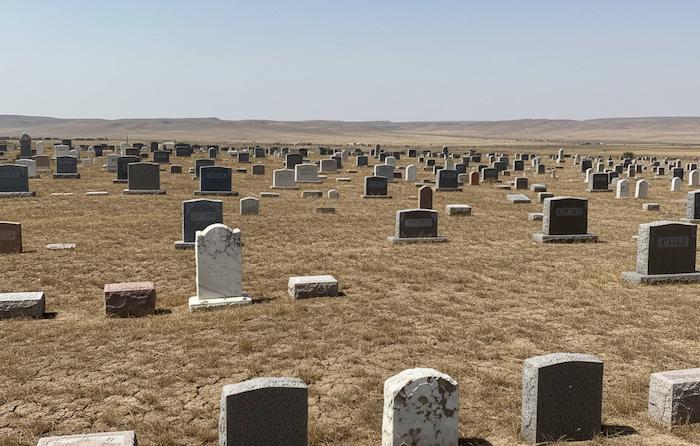
Tyler Sandy Soil Headstone Washout
Tyler's soil runs sandy with iron gravel mixed through it, drainage so fast that a single hard thunderstorm can wash the fine material out from under a footing before the ground even finishes puddling. Once that support washes clear, the footer settles unevenly into the hollow left behind, and the monument above tilts toward whichever side lost the most ground underneath it. Shoveling loose dirt back into the gap solves nothing, since the next storm just carries that fresh fill away the exact same way. That kind of tilt is what usually has someone searching headstone cleaning services near me, though the real fix here has nothing to do with cleaning at all. Tending's crew packs the excavation with angular gravel: the jagged edges interlock under the footing's weight while still letting rainwater drain straight through, so nothing ever washes loose again. The monument comes back level in that same visit, through Tending's headstone repair and restoration service. Tending backs every Tyler visit with a $2,000,000 liability policy, along with our membership in the ICCFA, the industry's leading cemetery and funeral association.

Tyler Red Dirt Headstone Stains
Tyler's red dirt gets tracked and splashed across the whole town after every hard rain, and cemetery markers catch the same treatment as that mud runs straight across a granite base. The color comes from dissolved iron, and once it works into the stone's surface, it oxidizes directly inside the granite's own grain, deep enough that a wipe-down never reaches it. Scrubbing at that orange stain with soap only drives more of the loose dirt into the same pores and darkens the mark further. Tending's crew draws the rust back out using a chemical poultice, a thick paste pressed over the stain and left to sit for a full day while it slowly pulls the iron out of the granite and into itself; peeling the dried paste away lifts the orange color right along with it.
Piney Woods Pine Sap Headstones
Tyler sits deep in the Piney Woods, and loblolly pines drip sap onto every marker beneath their canopy, sap that cooks under full sun into hard amber beads packed with trapped pollen and grit. Water alone can't touch a bead that's already hardened, and taking a blade to it risks scratching straight through the granite's polished face just to get the pitch loose. Tending's crew melts the hardened sap back down with a solvent built for tree resin, then lifts the softened residue away with a soft cloth that never touches bare granite with anything harder than fabric.
Rose Capital Salt Spalling Headstones
Tyler's reputation as the Rose Capital means heavy fertilizer use around cemetery plantings, and the salt in that fertilizer dissolves into the soil every time it rains. Granite draws that salty water up through its own pores, and once the sun evaporates the moisture back out, the salt itself stays trapped inside the stone. Enough of those wet-dry cycles and the trapped crystals grow large enough to push outward from within, popping small flakes of the stone's face loose in a process known as spalling. Wherever that flaking reaches down into carved lettering, the popped granite takes the engraved edge with it, leaving a name that reads shallower than it used to or vanishes in patches entirely. Tending's crew floods the surrounding soil to flush the salt out before it can do more damage, and wherever the spalling has already claimed part of an inscription, our headstone lettering restoration service recuts the surviving letters back to a depth that matches the rest of the inscription.
East Texas Lichen Headstones
Tyler's humidity lets lichen spread across shaded markers throughout its older cemetery sections, and the gray-green crust most people notice on the surface is only the visible part of a growth that reaches much deeper into the stone. That embedded lichen slowly dissolves the granite's polish through a mild acid it produces as it feeds, leaving pitted, dull patches behind wherever it's been established the longest. Pressure washing knocks the surface crust loose but does nothing to the growth still buried underneath, so the same patch returns within a matter of months. Tending's crew soaks the growth in a biocide that kills it well below the surface, and the dead lichen brushes free on its own days later without a single abrasive pass. Bronze plaques mounted in these same shaded corners corrode faster than the granite around them, since humidity keeps the metal's factory coating from ever fully curing. The greenish blotching that shows up once that coating cracks is what collectors call bronze disease, and Tending strips the plaque to bare copper first, then seals it under a replacement coating through our bronze marker restoration service.
Service Costs in Tyler
Every plan is priced through our online pricing calculator. The marker type and the care level set a fixed cost before anyone visits the cemetery. There is no walkthrough required just to get that number. Our team confirms the scope once they are on site and only adjusts if something was not visible from photos.
"Great service and good communication. The maintenance was better than what I expected. They did an awesome job getting rid of all the water marks and giving it a good shine. The only draw back is they did take about 2 months to do the maintenance. Other than that I am very pleased with the end result."
— gustavo galvan, Del Rio, Texas

- Sandy soil washout repair: angular gravel packed beneath the footing, with monument releveling in one visit.
- Red dirt stain removal: a chemical poultice that draws iron rust out of the granite's pores.
- Pine sap removal: a resin-specific solvent that softens hardened pitch without scraping.
- Salt spalling treatment with lettering restoration: soil flushing to stop the crystallization, plus engraving recut wherever flaking has already reached an inscription.
- Lichen treatment with bronze care: a biocide soak for the stone, paired with corrosion removal and resealing for bronze plaques.