
Cross Timbers Clay Monument Shift
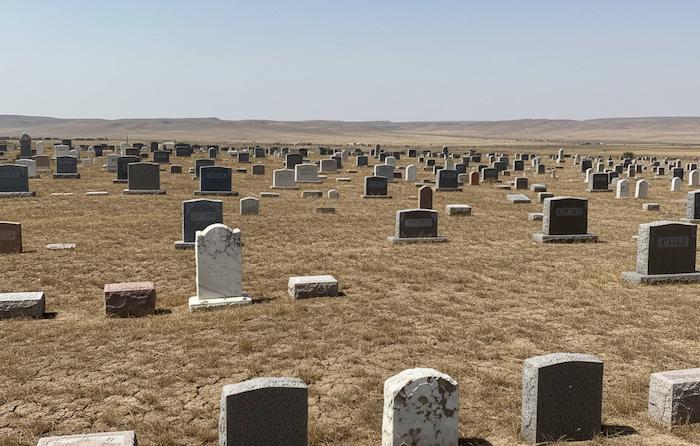
Drive a few miles in any direction around Fort Worth and the ground itself changes underfoot: soft Cross Timbers sand gives way to heavy Blackland clay, sometimes within the same cemetery. The clay swells when it rains and pushes upward. The sand underneath does the opposite, and it drops out from under a footing as it dries. A monument caught between the two doesn't move evenly in any direction. It can tilt, twist, or crack straight through a concrete base built for stable ground. Adding soil on top only masks the movement for a season. A monument that twists like this is often what brings someone to search for headstone cleaning services near me, and the soil conflict described above is almost always the actual cause. Tending's crew excavates the unstable mix around the footing and replaces it with a single, uniform base of crushed limestone. That material doesn't respond to moisture the way either native soil does. The monument stays level no matter which side of the soil boundary it ends up on. A monument that's already cracked or rotated from that movement needs more than a reset. Tending's headstone repair and restoration service handles that case: the crew pulls the damaged section, pours it onto the new limestone base, and levels the stone again in the same visit. This work in Fort Worth carries the same protection as everywhere else Tending operates: a $2,000,000 liability policy and membership in the ICCFA, the industry's leading cemetery and funeral association.
Stockyard Rail Grime on Headstones
Rail lines and old stockyard operations still run through parts of Fort Worth, and they leave behind a specific kind of dust: fine iron particles from the tracks mixed with organic grit. Morning dew turns that dust into a thin brown paste on the stone, and the sun bakes it into a hard shell by afternoon. It looks like rust at a glance, though the color actually comes from iron dust and organic residue baked together on the stone's surface. Scrubbing it just scratches the granite. Tending's crew applies a chelating solution that lifts the iron out and breaks down the organic binder holding the grime in place, then rinses everything away without any abrasion.

Panhandle Wind Erosion Grave Markers
Wind off the Panhandle reaches Fort Worth with nothing to slow it down for miles, and it carries fine sand that wears down exposed stone year after year. The polish goes first. Then the surface opens into pores that weren't visible before. Once the stone is that porous, rain soaks into it and stays there. A pressure washer forces that water even deeper into the open pores, and stone that stays wet through a hard freeze can crack from the inside. Tending's crew treats wind-worn granite with a penetrating consolidant that reinforces the stone from inside the pores, then follows with a breathable sealer that keeps new rain from soaking back in. That same wind erosion hits carved letters hardest. The engraved edges sit exposed to blowing sand in a way the flat, polished face doesn't. After enough years, a name or date can soften past the point where cleaning brings it back. That same visit can include headstone lettering restoration from Tending. The crew recuts the engraving back to its original depth, bringing the lettering back into focus.
Tarrant County Hard Water Headstones
Cemetery crews across Tarrant County run sprinklers non-stop through the summer just to keep the grass from dying, and that water comes straight from the region's hard aquifer supply. The sun evaporates that water off a hot headstone within minutes. The dissolved calcium stays behind, though, and bakes onto the face of the stone as a thick white crust fused directly to the granite. Acid-based cleaners burn into that same surface. Tending's crew uses a targeted descaling agent that breaks the calcium bond chemically, then rinses the crust away without touching the polish underneath. Bronze plaques near those sprinkler zones corrode from the same extra humidity, turning blotchy and green as the metal reacts with the air — restorers call it bronze disease. Tending's bronze marker restoration service strips that corrosion and reseals the plaque under a finish made for the extra moisture here.
"Great service and good communication. The maintenance was better than what I expected. They did an awesome job getting rid of all the water marks and giving it a good shine. The only draw back is they did take about 2 months to do the maintenance. Other than that I am very pleased with the end result."
— gustavo galvan, Del Rio, Texas
West Texas Armored Lichen Headstones
Sun exposure in Fort Worth is intense enough that lichen growing on stone here develops differently than it does in shadier climates. A hard, crusty shell forms over the organism itself, tough enough to survive months without rain. Underneath that shell, the lichen still anchors into the stone's mineral grain to reach whatever moisture is left inside the marker. A scraper just bounces off the hardened surface without loosening it, and scraping harder risks tearing out pieces of stone along with it. Tending's crew uses a two-step treatment here. A biocide kills the organism first, and a surfactant applied afterward softens the hardened shell enough that it lifts free within the following weeks.

Service Costs in Fort Worth
Every plan is priced through our online pricing calculator. The marker type and the care level set a fixed cost before anyone visits the cemetery. There is no walkthrough required just to get that number. Our team confirms the scope once they are on site and only adjusts if something was not visible from photos.
- Soil conflict monument stabilization and repair: excavation of unstable soil, a uniform crushed limestone base, and monument leveling in one visit.
- Stockyard rail grime removal: a chelating treatment that lifts iron dust and organic residue without abrasion.
- Wind erosion consolidation and lettering restoration: a penetrating consolidant and breathable sealer for the stone, with engraving recut where wind has worn it down.
- Hard water descaling and bronze care: a targeted descaling agent for calcium crust plus corrosion stripping and resealing for bronze plaques.
- Armored lichen removal: a two-step biocide and surfactant treatment that softens and lifts the hardened shell.