Weatherford Sandy Soil Headstone Washout
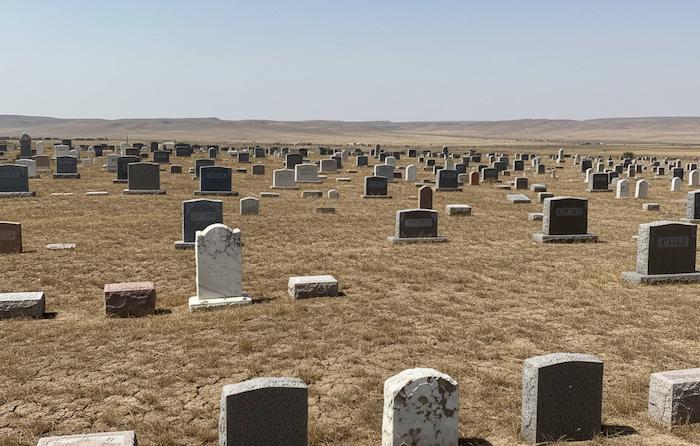
Weatherford's ground is mostly sandy loam soil, loose enough that it never really packs down the way clay or heavier dirt would, and that looseness leaves almost nothing solid for a concrete footer to grip once heavy rain starts moving through it. A hard downpour scours the loose sand out from directly beneath the footer, and once that support is gone, the monument tips forward into the empty space left behind, its face dropping toward the ground it used to stand clear of. Shoveling loose sand back into that gap fixes nothing, since the next hard rain just carries the fresh fill away exactly the way it did the first time. A monument tipping forward like that tends to be what gets someone looking up headstone cleaning services near me, even though the real cause sits entirely out of reach underground where no cleaning could ever help. Tending's crew fills the excavated space with crushed, angular gravel: the sharp edges wedge together under the footing's load while water still passes freely between them, leaving nothing soft underneath for a future storm to carry off. The repair itself falls under Tending's headstone repair and restoration service. Tending backs every Weatherford visit with a $2,000,000 liability policy, along with our membership in the ICCFA, the industry's leading cemetery and funeral association.
Weatherford Red Iron Headstone Stains
Weatherford's native soil carries a heavy red tint from dissolved iron, and fine red dust off that ground settles onto every headstone in town. Once rain wets that dust against the granite, the iron rusts directly into the stone's own grain, deep enough that nothing sitting on the surface alone ever touches it. Scrubbing at the orange stain only drives the pigment deeper into the same pores it's already bonded to. Tending's crew lifts the iron back out with a surfactant wash that works its way into those pores, pulling the rust free without ever grinding it in any further.
Parker County Orchard Sap Headstones
Parker County's peach and pecan orchards send pollen and tree sap drifting into Weatherford's cemeteries all season long, and the two combine on a headstone's surface into a hardened, gray shell that dust sticks to instantly. That shell repels rainwater outright, so a storm that would normally rinse dust free just beads across the top of it and leaves the buildup exactly where it started. Tending's crew works a chemical stripper into the shell to break down the sap binder holding it together, and the whole hardened layer lifts free with a simple hose rinse once that bond gives way.
"Tending is a platinum standard cemetery/headstone restoration company. I can’t say enough good things about Tending!"
— Beatle, Texas
Weatherford Sun-Baked Lichen Headstones
Sun this intense doesn't leave room for the soft, damp moss found in wetter parts of the state; what grows on Weatherford's shaded stones instead is a hard, crusty lichen baked onto the surface until it's practically fused there. In spots, that lichen actually tests harder than the granite's own polish, and scraping at it pulls small chips of stone away right along with the growth. Tending's crew skips scraping entirely and uses a biological soak that kills the lichen at the surface, loosening its hold gradually until it lets go and brushes away on its own days later. That same intense sun works against bronze plaques too, since the heat radiating off dark granite all summer cracks a factory coating years before it normally would, and once a crack opens, whatever rain does fall gets underneath it and starts the copper corroding into the blotchy green known as bronze disease. Fixing it means going past the surface entirely: our bronze marker restoration service takes the plaque down to clean copper, then applies a replacement coating engineered to survive the same heat cycling that cracked the original.

Parker County Fire Ant Headstones
Fire ants thrive in Weatherford's sandy soil and build their mounds directly against whatever monument base happens to be nearby, and colonies here tend to return to the same spot year after year once they've found ground they like. That repeated activity leaves the acidic soil in constant contact with the same section of stone far longer than a single season's mound ever would, and the granite there develops a rough, dull ring that no amount of surface washing removes. Monuments carrying an inscribed base or pedestal suffer the most from this, because that engraving happens to sit exactly where the acidic soil keeps building up. Tending's crew digs out the mound entirely and neutralizes the ground around it so nothing keeps collecting there year after year, and for any inscription the acid has already dulled, our headstone lettering restoration service cuts the lettering fresh again, past whatever depth the acid managed to reach.
Service Costs in Weatherford
Every plan is priced through our online pricing calculator. The marker type and the care level set a fixed cost before anyone visits the cemetery. There is no walkthrough required just to get that number. Our team confirms the scope once they are on site and only adjusts if something was not visible from photos.
- Footing washout repair: crushed angular gravel wedged beneath the base, with monument releveling handled in the same visit.
- Red iron stain removal: a surfactant wash that lifts rust particles out of the granite's pores.
- Orchard sap removal: a chemical stripper that dissolves the hardened pollen and sap binder.
- Lichen treatment with bronze care: a biological soak for the stone, paired with corrosion removal and resealing for bronze plaques.
- Fire ant treatment with lettering restoration: full mound excavation and soil neutralization, plus a fresh engraving cut wherever base lettering has already dulled.