
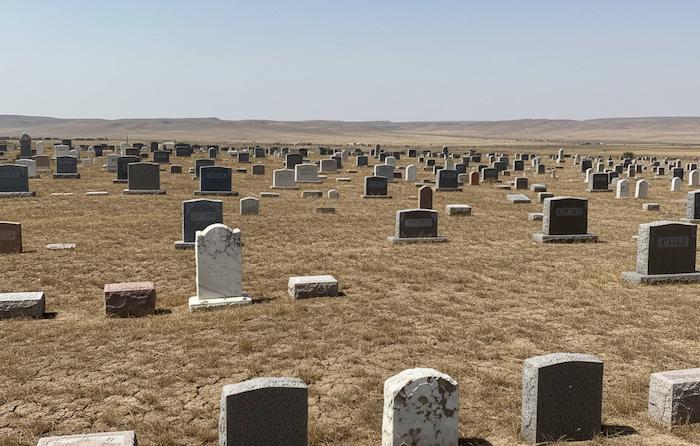
Blackland Clay Heave
The ground here is active clay. It moves.
Summer heat cracks the soil. Winter rain swells it. This cycle snaps concrete footers. Monuments tilt. Filling the gap with dirt fails; the clay swallows it.
For tombstone repair and restoration, we bridge the moving soil. We install deep friction piers. We anchor the monument to stable subsoil. The clay moves around the stone, not under it.
Lake Humidity (Black Algae)
Lake Grapevine keeps the air heavy. Stone stays damp.
This breeds black algae. It looks like soot, but it roots into the granite. Pressure washing drives the roots deeper. The mold grows back fast.
We use a biocide soak. It kills the roots inside the rock. The dead algae rinses off.
Oak Tannin Stains
Post Oaks are common here. They drop leaves year-round.
Wet leaves stick to the granite. They bleed tannic acid. It leaves a dark brown stain. Soap won't touch it. The stain is deep in the rock.
We use a chemical poultice. We apply a paste to the spot. It draws the stain out over 24 hours.
Hard Water Scale
Sprinklers run constantly. The water is hard.
The sun bakes the water off. White calcium crust stays behind. It bonds like cement. Scrapers scratch the stone. We use a buffered acid wash for cleaning stone gravestones. It dissolves the mineral bond. We rinse it away.
Mower Burns
Crews move fast. String trimmers hit the stone.
The nylon string melts on contact. It leaves black streaks on the corners. You can't scrub this off. We use a solvent. It dissolves the plastic residue. We wipe it clean.