


The Deep Frost Line
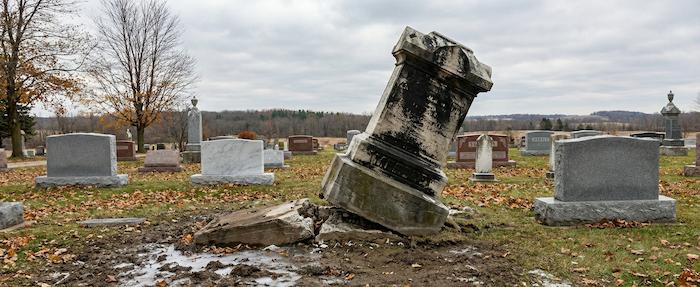
In Wisconsin, the frost goes deep. The ground heaves every winter. It pushes up, then drops back down in the thaw. That movement snaps concrete foundations like twigs.
We see upright monuments leaning dangerously or toppled completely face-down in the mud. You can't just prop them back up. The soil is unstable. For proper tombstone repair and restoration, we have to dig deep. We tear that broken concrete out of the ground. Then we pour a new footer way down below where the frost hits. We pack the hole with clean crushed stone. This lets the water drain out instantly so there is nothing left to freeze and push the marker up.
Cleaning Wausau Red Granite
Wausau Red is everywhere here. It’s a local favorite. It is tough and beautiful, but that rough "pitch-faced" texture is a magnet for lichen. Those gray and green circles grip the uneven surface tight.
If you try to scrape lichen off that rough rock, you will chip the stone crystals. Wire brushes leave metal behind that rusts later. We use a biological solution that kills the lichen down to the root. It loosens the grip. After a few days, we can wash the dead growth away with low pressure, leaving the red color bright again.
Milwaukee Industrial Soot
In the older cemeteries around Milwaukee and the Fox Valley, the stones are covered in history—literally. Decades of coal smoke from breweries and factories formed a hard black crust on the limestone and marble.
Rain doesn't touch this stuff. It is chemically bonded to the stone. It forms a shell called gypsum crust. If you chip it off, the stone comes with it. We use heavy-duty degreasers and specialized chemical poultices for our headstone cleaning services. We dissolve that black carbon layer slowly. It takes time, but we can reveal the white stone underneath without destroying the carving.
Limestone in the Driftless
Over in the Driftless Area, the old pioneer graves are mostly local limestone or dolomite. It is soft. A hundred winters of wind and sleet wear the faces smooth. The names are barely there.
A pressure washer is a death sentence for these markers. It will blow the remaining lettering right off. We treat them with extreme care. We use soft natural-bristle brushes and a gentle biocide to remove the mold eating the stone. We clean them just enough to read the inscription, stopping the decay before the history is lost forever.
Pine Pitch in the Northwoods
Up north, the cemeteries are full of pines. They drop sap all summer. The sun cooks it into hard, black beads on the headstones.
That resin turns into rock. Scraping it scratches the polish. We use a solvent paste for cleaning stone gravestones. We dab it on the sap, and it melts the resin back into a sticky liquid. Then we wipe it clean. We also rake out the pine needles. Wet needles pile up and hold water against the base, causing the stone to rot.
Farm Dust and Mud
Harvest season covers everything in dirt. That dust coats the rural cemeteries. When it rains, it turns into a heavy mud that bakes onto the stone.
It cakes into the engraved letters. Over time, it fosters moss growth. We flush that agricultural grime out. We use plenty of water and soft picks to clear the lettering. As part of our cemetery clean up, we trim the grass back so the mowers don't throw fresh clippings and dirt onto the clean stone.
Hard Water Scale
Our groundwater is hard. Cemeteries that run sprinklers leave their mark. You see white, cloudy streaks or orange rust stains on the dark granite markers.
That scale is calcium. It bonds to the polish. Household cleaners won't touch it, and abrasives ruin the shine. We use a professional descaler. It dissolves the mineral buildup chemically. We rinse it away, and the reflection comes back sharp and clear.