
Stone Care in the Black Belt
Montgomery is built on expansive clay. The ground here is unstable. In cemeteries like Oakwood and Greenwood, the soil moves constantly.
We deal with monuments that tip over because the ground heaves under them. We also fight the mold and algae fueled by the river humidity. Families searching for headstone cleaning services near me call us to level these leaning stones and strip off the thick black growth that eats into the soft marble.
Expansive "Black Belt" Clay
The dark soil in Montgomery acts like a hydraulic jack. Rain makes the ground swell and shove the foundation. In the summer heat, the soil shrinks back and leaves the concrete loose.
This constant movement rocks the headstones until they tip over. We don't just push them back. We dig out the moving clay around the base. We replace it with angular gravel. Gravel drains water and stays solid, keeping the monument upright even when the surrounding ground moves.
River Valley Mold and Algae
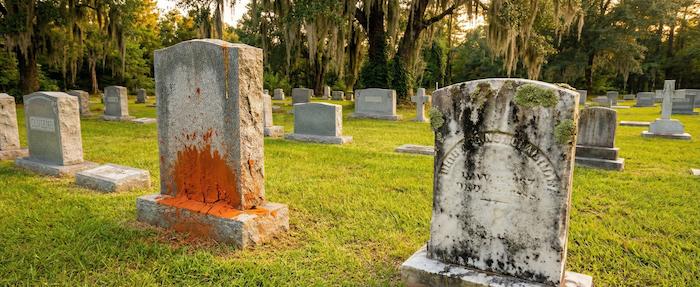
The air here stays wet. This feeds thick black algae and green moss. It coats the stones in Oakwood Cemetery, hiding the inscriptions.
Scrubbing soft marble ruins the carving. Pressure washing destroys the surface. We use a biocide wash. It soaks into the stone and kills the growth at the root. The dead organic matter washes off with the rain, leaving the stone clean.
Red Clay Staining
In the eastern parts of the city, the soil is red. Rain splashes this mud onto the white marble bases.
The iron in the clay acts as a dye. It turns the stone orange. Soap won't remove it because the stain is embedded in the rock. We apply a chemical poultice. This paste draws the iron out of the stone. We remove the paste, and the orange color comes with it.
Fire Ant Damage
Fire ants are a plague in Montgomery. They build massive mounds next to and under headstones.
They mine out the dirt supporting the foundation. The stone loses support and tips into the hollow void. We remove the colony. We fill the tunnels with crushed rock and repack the base. Ants cannot tunnel through heavy gravel, so they don't return to that spot.
Sugar-Decay on Historic Marble
Montgomery has thousands of old marble markers. They are soft. Acid rain and humidity have dissolved the binder in the stone.
The surface turns to powder. If you wipe it, you wipe the name away. We apply a consolidant to these stones. It is a liquid hardener that soaks in and locks the grains together. It stops the dusting and preserves the carving.
Lichen on Granite
Hard, crusty lichen grows on the rough granite markers in Greenwood. It digs roots into the stone surface.
Scraping lichen leaves scars on the stone. We use a specialized cleaner to detach the growth. We saturate the lichen, wait for the chemical to release the bond, and rinse it off. The stone stays intact.
Bronze Corrosion
The humidity here destroys the clear coat on bronze markers. Once the coat fails, the metal oxidizes and turns chalky green.
We strip the failed lacquer. We clean the bronze down to the bare metal using glass beads. Then we apply a new industrial coating to seal it against the damp air.
Service Costs in Montgomery
Stabilizing stones in expansive clay is heavy digging. Restoring sugary marble requires expensive materials. We inspect the site to check the soil stability and stone condition before giving a quote.
- Clay Stabilization: Replacing swelling soil with gravel.
- Biocide Cleaning: Removing heavy mold and algae.
- Marble Consolidation: Hardening eroding historic stones.
- Stain Removal: Extracting red clay and rust stains.