The Hardpan Water Trap
Citrus Heights soil has a layer of "hardpan" clay. This is a cemented, impermeable layer below the surface. Water cannot drain through it.
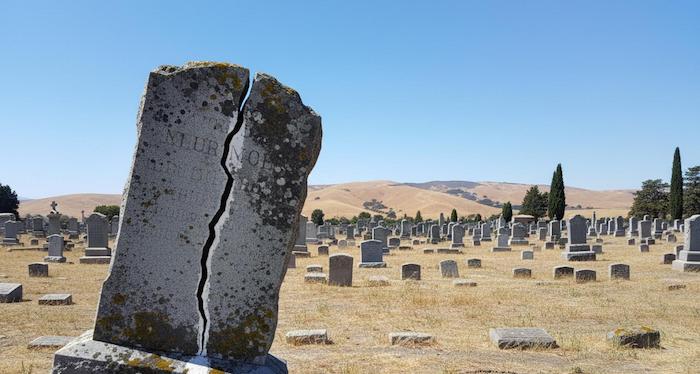
Rainwater hits this barrier. It fills the topsoil until it is fully saturated. The ground loses cohesion. Heavy monuments sink because the soil structure fails under saturation.
If you are searching for tombstone repair and restoration, adding dirt won't fix it. The water will still be trapped. We punch through the hardpan layer. We install a gravel leach field that allows water to drain deep into the earth, keeping the foundation dry and stable.
Oak Gall Acid Stains
The historic cemeteries here, like Sylvan, are shaded by Valley Oaks. These trees drop "oak galls." These pods contain concentrated tannic acid.
When a wet gall sits on a headstone, it releases this acid. The acid reacts with the stone pores. It creates a blue-black organic stain that bonds to the granite matrix.
This stain is chemically insoluble in water or soap. We use chemical poultices in our grave site cleaning services. We apply a paste that re-liquefies the acid and wicks it out of the rock pores.
Ozone Oxidation
Summer heat traps ozone and exhaust in this part of the valley. This polluted air is reactive. It attacks the protective lacquer on bronze markers. The clear coat fails.
The metal turns dull and brown. Once the coating is gone, corrosion starts. We strip the damaged lacquer chemically. We clean the oxidation down to the raw metal and apply a new architectural-grade sealant to protect the bronze from the valley smog.