The Smog Wall
The San Gabriel Mountains act like a dam. They stop the airflow. Pollution from the entire LA basin stacks up against the slopes and sits on Pasadena. It cooks there. This creates a stagnant, acidic haze that destroys stone.
Look at the old white marble markers at Mountain View. They feel rough, like loose sugar. That is the acid dissolving the calcium binder that holds the stone together. If you are searching for headstone cleaning services near me because a marker is crumbling, do not scrub it. Scrubbing wipes the face off.
This is chemical erosion. The sulfur in the smog mixes with morning dew to form weak sulfuric acid. It eats the "glue" inside the marble. The crystals detach. The stone literally turns to dust.
We focus on conservation. We don't just wash; we consolidate. We apply a chemical hardener that soaks into the rotting stone. It replaces the lost calcium binder. It freezes the decay in place. This allows us to gently clean the surface without destroying the inscription. It saves the history from dissolving into white powder.
Old Tree "Tar"
Pasadena is famous for its trees, but they are messy. The heritage oaks and conifers drop sap constantly. This isn't like maple syrup; it is a resin. When it lands on a headstone, it cures into a hard, black tar. Dust sticks to it, creating a textured, ugly scab on the monument.
You can't wash this off. It is waterproof. If you try to scrape it, you will gouge the soft marble or scratch the granite polish. Tending uses specialized grave site cleaning services with organic solvents. We have to liquefy this resin.
We apply a solvent paste directly to the spots. It breaks the molecular bond between the tree sap and the stone. The tar turns back into a liquid goo. We wipe it away. We then flush the pores to ensure no sticky residue remains. This reveals the clean stone underneath without mechanical abrasion.
The Raymond Fault Roll
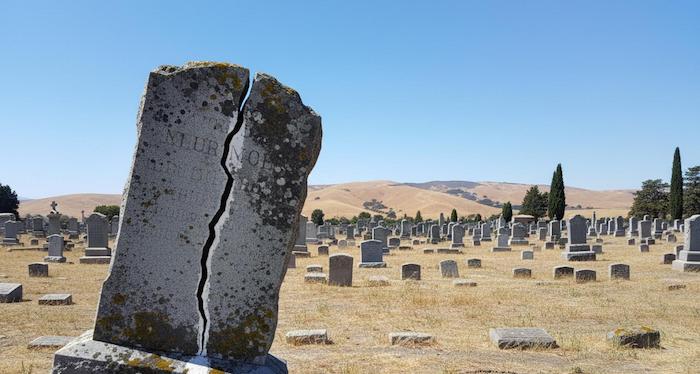
The ground here has a "roll" to it because of the Raymond Fault line. It shifts the soil density constantly. This causes differential settlement. We see heavy monuments sinking unevenly or twisting on their bases.
If you are looking for tombstone repair and restoration because a marker looks crooked, it is usually a foundation failure. The soil under one corner has given way.
We fix the ground, not just the stone. We lift the monument. We excavate the soft, shifting soil from the low side. We pack the void with angular aggregate (gravel). Gravel locks together. It doesn't compress like dirt. It creates a stable, level platform that stops the movement, keeping the memorial upright even as the fault line creeps.