
Canopy Humidity Trap
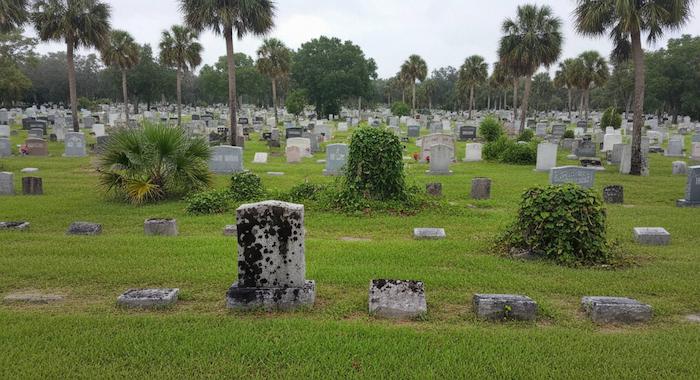
Coral Gables is defined by massive Banyan and Oak canopies. These trees create deep shade. They block the wind and sun. The air underneath stays humid all day. Granite and marble markers never fully dry out.
This creates a wet environment for aggressive lichen and thick moss. The roots dig into the stone face. Pressure washing rips the surface of historic stone. We use specialized grave site cleaning services. We use a biological inhibitor. It kills the lichen at the root. The growth dries up and falls off without scrubbing.
Oolite Bedrock Shifting
The ground here is a thin layer of soil over Oolite limestone. This rock is jagged and full of holes. Heavy rain washes the topsoil down into these rock voids.
The monument loses its footing. It tilts against the hard bedrock. Adding dirt fails; it washes right through. For lasting tombstone repair and restoration, we stabilize the sub-base. We create a level pad using crushed gravel. This friction pile sits flat over the jagged bedrock. It stops the rocking.
Berry & Sap Stains
Ficus and Banyan trees drop berries and sticky sap. These land on the markers and rot. They release organic acids and sugars. This creates dark purple or black stains that bond to the stone.
Soap creates a sticky mess. We use professional cleaning stone gravestones chemistry. We use specific solvents to dissolve the sap resin. We use surfactants to lift the organic berry dye out of the pores.
Historic Bronze Preservation
Many older plots here use bronze plaques. Time and humidity cause "Bronze Disease." The metal turns chalky green. This is active corrosion eating the copper.
We distinguish between healthy patina (brown) and active rot (green). We use strict cleaning bronze cemetery markers protocols. We remove the corrosion. We heat the metal to drive out moisture. We reseal it with a marine-grade clear coat to stop the air from reaching the metal.