Biscayne Bay Algae on Headstones
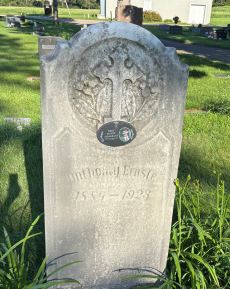
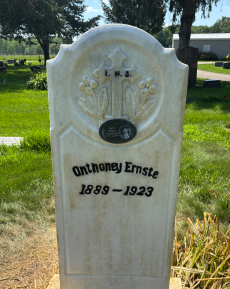
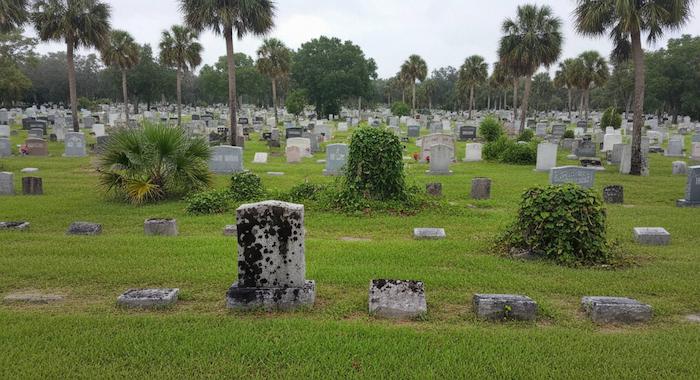
Coastal humidity in Miami never really lets up, and that constant dampness lets black algae grow easily on stone. The species behind most of the staining, Gloeocapsa magma, isn't just a surface film. The roots reach past the surface and settle inside the stone itself. Scrubbing knocks the crust off the top, but the colony returns within a season because those roots survive underneath. Families searching for headstone cleaning services near me in Biscayne Bay's humid neighborhoods often send us photos of a marker that has gone from light gray to almost solid black within a year or two. Tending's crew soaks the stone in a biological solution built to reach those roots. That kills the colony completely. A surface scrub alone only fades the color for a season before it returns. The same salt-heavy air that keeps everything damp also breaks down bronze plaques faster here than almost anywhere else in the state. Once chlorides get past the clear coating, the copper underneath starts to react and turns a chalky green, a reaction known as bronze disease. Our bronze marker restoration service strips that corrosion back to clean metal and reseals it with a marine-grade coating built for salt air. Tending carries a $2,000,000 liability policy and belongs to the ICCFA, giving every job real coverage and standing in the industry.
Oolite Limestone Sugaring Grave Markers
Many of Miami's older markers were cut from Oolite, the porous local limestone that early builders quarried right out of the ground here. Acidic rainfall reacts with that limestone over time, and the surface slowly loses its binder. The stone starts to feel loose and grainy, almost like damp sugar, in a process restorers call sugaring. Scrubbing a marker in that state does more harm than good, since it can wipe away carved lettering along with the loose surface. Our crew treats sugaring markers with a liquid consolidant that soaks into the stone and re-binds the loose grains. That treatment stabilizes the crumbling stone from within. Where the lettering itself has already worn past the point a consolidant can fix, that same visit can include headstone lettering restoration. The crew recuts or refills the inscription to bring it back to full legibility.
Biscayne Aquifer Sinking Monuments
Much of Miami-Dade sits close to the Biscayne Aquifer, and the water table underneath most cemeteries stays high year-round. A heavy tropical downpour can saturate that ground fast enough to turn loose fill sand into something closer to slurry for a few hours. Once that happens, the sand shifts out from under a monument's footing. Heavy stones settle unevenly or tip as the ground resettles. Piling fresh soil on top does not fix the footing underneath. Tending's crew digs out the saturated base and levels the monument again, locking a gravel bed underneath that keeps holding even if the ground floods a second time. When a marker has cracked or come loose from all that shifting, our crew folds headstone repair and restoration into the same visit and rebuilds the footing from scratch.
Miami-Dade Hard Water Scale Headstones
Cemetery irrigation here draws on the same mineral-rich groundwater across Miami-Dade, and the calcium in it doesn't rinse away once it hits hot stone. Water flashes into vapor almost the moment it lands, leaving the dissolved minerals behind every time the sprinklers run. Over months, that residue thickens into a chalky, cement-like coating across the surface. Hand-scraping it away almost always leaves scratches in the polish underneath. Our descaling treatment dissolves that buildup back into a liquid, so nothing has to be scraped off by hand at all.
"Excellent fast reliable work. They did a fantastic job and I'm very pleased with them."
— Phillip Pessar, Miami, Florida

Service Costs in Miami
Every plan is priced through our online pricing calculator. The marker type and the care level set a fixed cost before anyone visits the cemetery. There is no walkthrough required just to get that number. Our team confirms the scope once they are on site and only adjusts if something was not visible from photos.
- Algae and bronze restoration: deep-soaking biological treatment for stone plus stripping and resealing for bronze plaques.
- Limestone consolidation and lettering restoration: liquid consolidant treatment paired with recut or refilled inscriptions.
- Monument leveling and repair: excavation, releveling, and gravel base reconstruction for sunken or shifted markers.
- Hard water scale removal: descaling treatment that dissolves mineral crust without damaging the polish.