


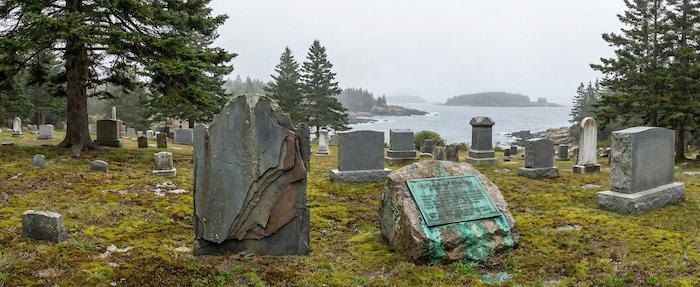
The "Mud Season" Heave
Mud season is brutal on cemeteries here. The bottom layer of ground stays frozen solid, while the top foot melts into a slurry. The water sits there and churns.
This shifting muck throws headstones out of line. We find them tipped over or sunk deep. You can't just set them back up in that soft dirt. For proper tombstone repair and restoration, we dig out the bad soil. We put in a deep footer of coarse crushed stone. This creates a drain so the frost doesn't grab the bottom of the monument and throw it around next year.
Old Slate Splitting
Our oldest yards are full of slate markers. It is a layered stone. After two hundred years, water works its way into the top edge and forces those layers apart.
When that trapped water freezes, it splits the face right off the block. We have to be extremely careful. We clean out the debris between the layers and inject a specialized adhesive. We clamp it tight until it cures. We seal that top edge tight. You have to keep the rain out of those layers, or it will just split again.
Coastal Salt Spray
Near the water, the fog carries heavy salt. It settles on everything. You can feel the grit on the surface of the stones. That salt eats into the polish on granite and turns bronze markers green.
It creates a corrosive paste that sticks to the surface. We use a neutralizing wash to break down the salt deposits. On bronze, we strip the corrosion down to the bare metal and apply a hot wax coating. It seals the surface. It keeps the sea air off the metal so the inscription stays sharp.
Pine Pitch and Needles
White pines drop pitch that is sticky as glue. Once it dries, it is hard as glass. It lands on the headstones and bakes on in the sun.
Scraping it scratches the stone. We use a solvent poultice. We put it on the sap spots and let it sit. It softens the pitch back to a liquid, and we wipe it off. We also rake the needles away. Those wet piles are acidic. They sit there and eat away at the base of the monument.
Lichen on Gray Granite
Maine granite is tough, but it has a rough grain. That texture is perfect for lichen. We see heavy gray and green crusts growing all over the markers, especially in the shade.
That lichen digs its roots right into the granite crystals. If you pull it off dry, you take pieces of stone with it. We spray it with a biological cleaner. It kills the growth and loosens the roots. After a while, we can brush it off gently with water. The stone looks clean, and we haven't damaged the grain.
Marble "Sugaring"
Acid rain hits the Northeast hard. It dissolves the calcium in our old white marble stones. The smooth surface turns rough and gritty, like a sugar cube.
The stone is literally dissolving. If you scrub it, you wipe the lettering away. We clean these with soft brushes and plenty of water. We remove the biological growth that holds moisture against the stone. We apply a consolidant to strengthen what's left of the surface, but we never try to make it look "new." We just want to save the history.
Moss in Deep Shade
Many Maine cemeteries are tucked into the woods. They don't get much sun. Moss grows thick and fast in that damp environment.
Thick moss holds water like a wet towel against the stone. That water freezes and cracks the face. We kill the moss and remove it. As part of our grave site cleaning services, we trim back the low branches on nearby trees. The stone needs airflow and sunlight to stay dry. If it stays damp, the moss comes right back.
Road Salt Runoff
Plow trucks push salty slush right up against the cemetery fences. When it melts, that brine soaks into the porous bases of the stones.
As the water evaporates, salt crystals grow inside the stone and blow the surface apart. We flush these stones with fresh water and a salt neutralizer. For headstone cleaning services near the road, we focus on getting that winter chemical buildup out of the pores before it does permanent damage.