
Brunswick Executive Airport Exhaust Films Grave Markers
The airport on the north side of town has run flights for more than eighty years. Navy patrol planes used the runways first. Private jets and small aircraft use them now. The exhaust still drifts the same distance it always did, and it settles over nearby cemeteries as an oily black film. People searching for headstone cleaning services near me around that side of town usually describe the same thing: a greasy shine that water alone won't touch. Flat markers catch more of the drift than upright stones do, especially when the wind comes off the runway side. Families near the airport side sometimes notice the film returning within a single year.
Scrubbing that film with a stiff brush just grinds it deeper into the granite's pores. We use a chelating degreaser built for aviation exhaust and diesel residue, worked in by hand. One treatment usually clears years of buildup, even on flat markers that catch the most direct drift from the runway side. Stones farther from the airport show a much lighter version of the same film.

Androscoggin Silt Heaves Grave Footings
The Androscoggin runs right along Brunswick. Old mills here used to run on its current, and the ground next to it is still soft and silty today. Water doesn't drain fast through soil like that. Winter freezes trap it in the silt, and the ice pushes the ground upward. Spring thaw pulls the support out from under a footer all at once, and a monument that stood straight in December can tilt hard by April. Cemeteries set back on higher ground rarely deal with this. The soil up there drains well before winter sets in, so it never really freezes solid.
"My Angela's headstone had not been cleaned in fifty years. I moved to Florida many years ago and I do visit San Diego, but never was able to get her headstone cleaned. My Angela is in the children's mausoleum chapel. I miss her every day. She was 5 years old when she passed. Well, im telling you after you guys cleaned up her headstone I didn't even remember what it had originally looked like. What a fabulous job! Everyone should use your company. It is truly beautiful. I can't wait for the rest of my family to see it. Thank you so much. Margaret "
— Roberta Silfen, Bangor, Maine
We dig past that unstable silt layer and pack the hole with crushed stone. Water moves straight through crushed stone. Silt traps it. Tilted monuments get lifted, leveled, and reset on that new base as part of full tombstone repair and restoration. Most repairs hold through the next thaw cycle without any further movement, since the new footer sits well below where the silt actually shifts.
Casco Bay Fog Grows Lichen and Dulls Bronze
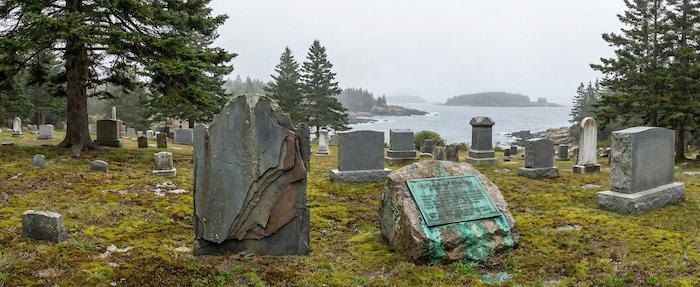
Fog rolls in off Casco Bay most mornings, and granite near the coast almost never gets a full day to dry out. That constant dampness feeds thick white and gray lichen across shaded and flat markers alike, with roots that dig straight into the stone. Bronze veterans' plaques nearby dull and green under the same moisture, sometimes within just a few seasons of the coating wearing through.
Pulling lichen off by hand tears the surface along with it, so we treat it with a biological cleaner that kills the growth before anyone touches the stone. Bronze pieces get bronze grave marker cleaning at the same visit, since one trip covers both materials. Grave cleaners near me searches from families along the coast usually mention the lichen coming back faster than they expect, even after a thorough wash the season before.
Maine Winters Crack Carved Lettering
Deep cold here shrinks the paint fill inside engraved letters much faster than the surrounding stone contracts. That mismatch cracks the paint into flakes, and wind picks off what's left within a season or two. Letters that once stood out clearly fade into blank, unreadable grooves, especially on older stones facing the coldest exposure.

We scrape out what remains of the old fill, dry the grooves completely, and pack them with a fresh acrylic dye built to handle freeze-thaw cycling. For letters that have worn down from more than just paint loss, we also offer gravestone lettering repair to bring the original depth back. Older stones in town sometimes need this every few winters, depending on how exposed the plot is.
Service Costs in Brunswick
You pick your monument type and plan in our online calculator. That price is fixed once you book. No site visit needed to get the quote.