
Stone Care at the River's Mouth
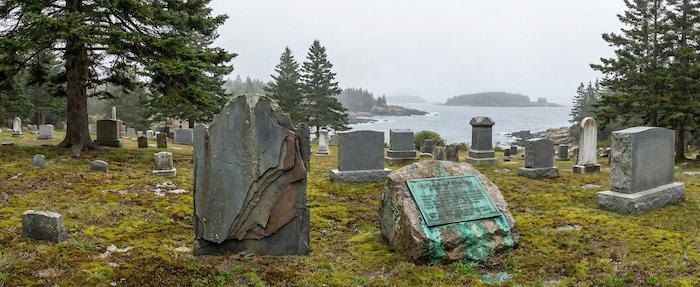
Biddeford is a mix of hard industry and salt water. The Saco River flows right through the textile mills and out to the ocean. This creates a double threat for cemeteries like Woodlawn and St. Joseph's.
We see granite coated in century-old coal soot from the brick mills. We see marble eaten away by the salt air from the coast. The dampness from the river keeps everything wet, which leads to rot and frost damage. Families searching for headstone cleaning services near me call us to strip off this industrial grime and stabilize markers that are splitting apart from the coastal freeze.
The Mill Town Black Crust
For generations, the textile mills burned coal. That smoke settled on every stone in town. On cemetery monuments, it mixed with rain to form a black gypsum crust.
This isn't dirt. It’s a chemical bond. Scrubbing it just scratches the stone. We use a sulfur-digesting chemical paste. It softens the black shell so we can rinse it away. We get the stone back to its original color without destroying the finish.
Salt Air Spalling
Near Biddeford Pool and Hills Beach, the air is salty. That salt lands on the headstones and soaks into the pores.
When the stone dries, the salt crystallizes inside. It expands. It pops the face of the stone off in jagged flakes. We call this spalling. You can't fix the missing chunks. We apply a desalination poultice to draw the remaining salt out. This stops the stone from blowing apart further.
River Fog and Moss
The Saco River generates thick fog. The cemeteries near the water stay damp. That moisture feeds heavy green moss on the granite.
Moss keeps the stone wet. In a Maine winter, a wet stone is a dead stone. The water freezes and cracks the granite. We kill the moss with a biocide. The roots release their grip, the growth falls off, and the stone dries out before the next freeze.
Slate Delamination
The historic burying grounds have slate markers from the 1700s. Slate is made of layers.
Water gets into the edges. Ice wedges the layers open. The stone splits like a deck of cards. Once it splits, you can't clamp it back. We inject a flowable grout into the cracks. It fills the voids and keeps the water out so the stone stays solid.
Sinking in Silt
Near the river, the soil is silty loam. It moves easily when wet. Heavy monuments sink straight down or tip as the bank erodes.
We see markers buried halfway up the inscription. We lift the stone. We dig out the soft silt. We replace it with compacted angular gravel. Gravel stays put. It locks the foundation in, and the sinking stops.
Iron Pin Failure
The large monuments in St. Joseph's use iron pins to hold the blocks together. The salt air accelerates rust.
Rust expands with massive force. It cracks the granite from the inside. We hoist the top pieces off. We drill out the corroded iron. We install stainless steel pins that can handle the salt air without rusting. Then we seal the joint tight.
Lichen on Rough Stone
The rough-hewn granite bases act like velcro for lichen spores. The salty, clean air makes them grow thick and hard.
This lichen produces acid that etches the stone. You can't wire brush it off; you'll ruin the rock pitch. We spray a biological cleaner that soaks deep into the growth. It kills the lichen at the root. The rain washes the dead debris away, leaving the natural stone texture.
Bronze Oxidation
Salt air is brutal on bronze markers. It eats the protective lacquer and attacks the copper.
The metal turns green and starts to pit. We strip the damaged coating. We polish the bronze to remove the corrosion. Then we apply a heavy-duty clear coat designed for marine environments to protect the metal from the salt spray.
Service Costs in Biddeford
Removing 100-year-old mill soot takes time and chemistry. stabilizing a slate marker is delicate work. We inspect the stone to see what we are dealing with before quoting a price.
- Soot Removal: Cleaning industrial carbon crusts.
- Salt Extraction: Drawing salts out of spalling stone.
- Leveling: Raising stones sinking in river silt.
- Slate Repair: Sealing delaminating historic markers.


