
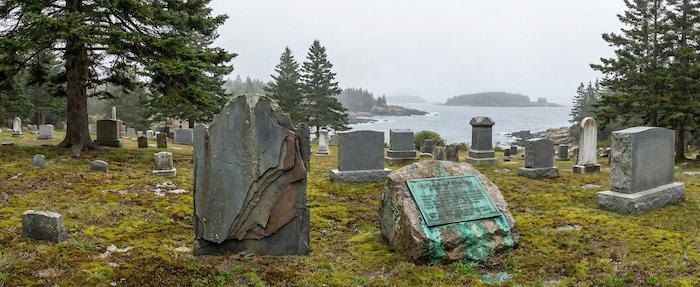
Stone Care on the Sand Plains
Brunswick sits on a massive deposit of glacial sand. Sand drains water well, but it shifts under weight. In cemeteries like Pine Grove and Riverside, foundations don't stay put.
We face shifting sand that tips monuments over, and sticky tree sap from the heavy pine canopy. We see granite markers leaning forward as the ground washes out, and others coated in a mix of sap and industrial soot. Families searching for headstone cleaning services near me call us to stabilize these sinking stones and strip off the black tar that soap won't touch.
Sand Washout and Sinking
Brunswick soil is loose. It flows like sugar when it's wet. Heavy rain undermines the corners of headstones.
We see foundations that have washed out completely. The stone sinks straight down. We jack up the monument. We excavate the loose sand and replace it with angular crushed stone. Crushed stone locks together. It forms a solid base that water can't wash away.
Pine Pitch in Pine Grove
Pine Grove Cemetery is full of massive white pines. They drop sap year-round. This sticky resin lands on the headstones and bakes hard.
It turns black as it catches dirt and coal dust. You can't scrape it; you'll scratch the polish. We use a specialized solvent poultice. It melts the hardened resin. We wipe the sludge away to reveal the clean granite underneath.
Paper Mill Sulfation
The Pejepscot paper mills operated for over a century. The sulfur smoke reacted with the marble and limestone markers.
This created a black gypsum crust. It looks like burnt sugar. It bonds chemically to the rock. We use a cleaning gel that dissolves the gypsum bond. It releases the black stain without damaging the stone surface.
River Moss and Algae
Riverside Cemetery is right on the banks of the Androscoggin. The river fog keeps the stones wet until noon.
Green algae and thick moss cover the north sides of the monuments. This wet blanket freezes in winter and cracks the stone. We treat the stone with a biocide. It kills the spores deep in the pores. The growth dies and falls off.
Iron Jacking on College Plots
The historic plots near Bowdoin College feature massive granite monuments. The old builders pinned the blocks together with iron.
Water gets in. The iron rusts and swells. That pressure snaps the granite blocks. We have to take the monument apart. We core out the bad iron. We swap it for stainless steel pins that won't rot. Then we seal the seams tight.
Lichen on the Plains
The air on the Brunswick plains is clean and humid. Crustose lichen thrives here. It forms hard, circular patches on the granite.
This isn't just dirt. The lichen digs into the stone and etches the polish. We don't scrub these. We soak the growth with a biological cleaner. It kills the root system. The next rainstorm washes the dead lichen away, and the stone looks new again.
Marble Erosion (Sugaring)
Acid rain has taken a toll on the older white marble tablets in Maquoit Cemetery. The calcium binder dissolves.
The stone surface turns into loose sand. We call this "sugaring." We clean these very gently with low pressure and soft brushes. Then we apply a consolidant. This liquid soaks in and re-hardens the stone surface to stop the lettering from disappearing completely.
Service Costs in Brunswick
Stabilizing a monument in loose sand requires extra gravel and labor. Removing heavy pine pitch is slow, detailed work. We inspect the stone and the soil conditions before quoting a price.
- Sand Stabilization: Resetting stones in loose sandy soil.
- Pitch Removal: Cleaning hardened pine sap and soot.
- Mill Crust Removal: Stripping industrial sulfur stains.
- Iron Repair: Replacing rusting pins in large monuments.


