
Stone Care on the Casco Bay
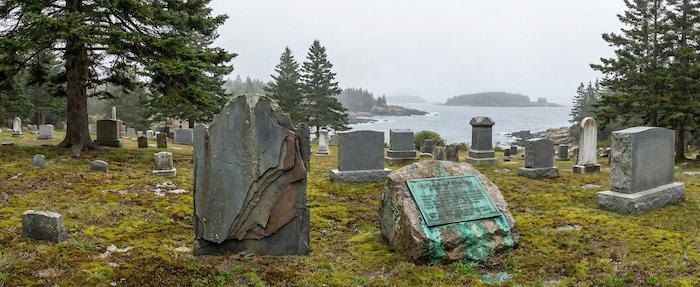
Portland cemeteries face the Atlantic Ocean. That means salt air, deep freezes, and aggressive lichen. The weather here is hard on masonry.
Walk through Eastern or Evergreen, and you see the damage immediately. Granite turns green. Slate splits into sheets. Salt air penetrates deep. It eats the stone from the inside out. Families searching for headstone cleaning services near me call us to stop this decay and reset monuments that the Maine winter has pushed over. We strip off the biological growth and stabilize the stones against the deep frost.
Salt Crystallization (Sub-florescence)
You can taste the salt in the air here. That salt gets deep into the pores of marble and granite.
When the stone dries out, the salt stays inside. It crystallizes and expands. This internal pressure blows the face of the stone off. We call this spalling. You can't wash this away with water; that just drives the salt deeper. We use a chemical poultice to draw the salts out to the surface where we can wipe them away.
The Deep Frost Heave
The frost line in Maine goes four feet deep. The ground creates massive force when it freezes.
This movement throws headstones out of level. A shallow foundation doesn't stand a chance. We see monuments tipped over or pushed sideways. To fix it, we have to dig deep. We excavate below the frost line or install a deep gravel pad. Gravel drains the water. No water means no ice to throw the stone around.
Coastal Lichen on Granite
Maine Granite is tough, but the salt fog is worse. It feeds thick, stubborn lichen crusts.
We see orange and grey crusts covering the inscriptions. These aren't just surface stains; they dig roots into the mineral structure. Scraping them damages the stone. We use a heavy-duty biocide. It kills the organism. The lichen releases its grip and dries up. The rain eventually washes the dead debris away, leaving the grey stone clean.
Slate Delamination
Portland's oldest graves in Eastern Cemetery are made of slate. Slate is made of layers, like a book.
Water gets between these layers and freezes. The ice wedges the stone apart. Once slate splits, you can't press it back together. The damage is done. We inject a flowable grout into the open cracks. It locks the layers down so winter water can't get in to split it further.
Seagull and Bird Droppings
Seagulls make a mess of the monuments. That white paste isn't just dirty; it burns right into the polish.
Guano burns into bronze and stains granite white. If left alone, it etches the stone. We clean this with a pH-neutral solvent. We have to be careful not to scratch the stone with the grit in the droppings. We soften the mess and rinse it away to neutralize the acid.
Bronze Corrosion in Salt Air
Bronze markers don't do well near the ocean. The salt air eats the protective lacquer fast.
The metal turns a bright, chalky green. We call it "bronze disease." It eats the metal away. We restore these markers by stripping the failed coating. We polish the bronze to remove the corrosion pits. Then we apply a marine-grade clear coat to stand up to the salt spray.
Moss in Shaded Groves
Evergreen Cemetery has massive trees. The shade keeps the stones wet. Moss grows thick on the north sides.
Moss holds water against the stone. This accelerates freeze-thaw damage. We treat the moss with a biological cleaner. It kills the roots. The moss turns brown and falls off. By removing the moss, we let the stone dry out, which stops the freezing damage.
Service Costs in Portland
Stabilizing a splitting slate marker is delicate work. Removing deep salt deposits takes multiple poultice applications. We inspect the stone to see how deep the damage goes before quoting a price.
- Salt Extraction: Removing sub-surface salts with poultice.
- Deep Leveling: Resetting stones below the frost line.
- Slate Repair: Grouting and sealing delaminating layers.
- Biological Cleaning: Killing coastal lichen and moss.


